The moment a wildfire starts near you, you'll get an instant alert and simple tips to reduce your smoke exposure.
30xSmaller than a human hair
Fine enough to reach deep into the lungs. A MERV 13 is built to capture it.
It Doesn't Stay Local
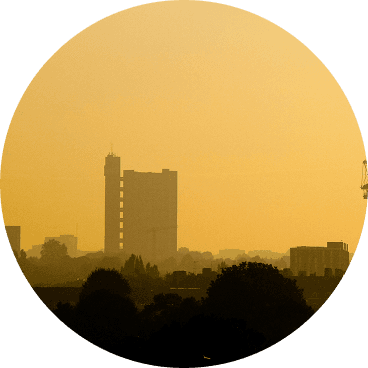
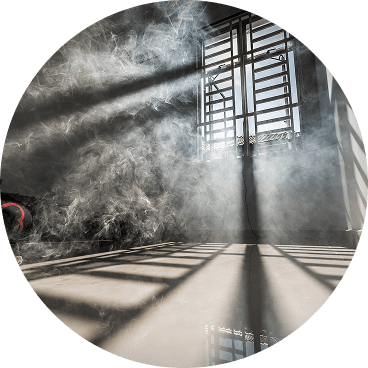
Smoke rides the wind far downwind — you can get smoky air with no fire nearby.
Simple steps to reduce indoor exposure.
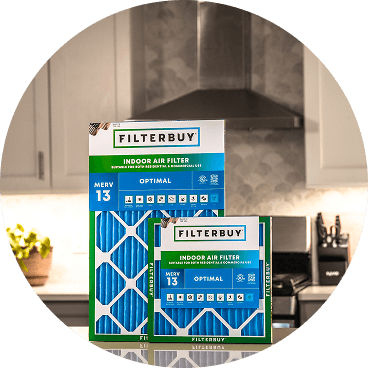
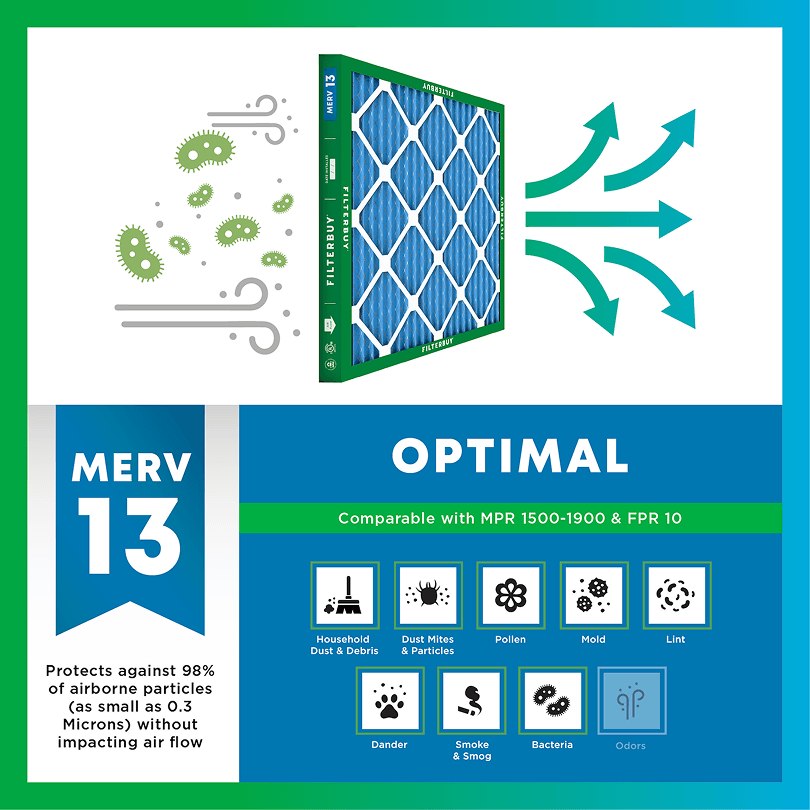
During smoke events, the EPA recommends upgrading to a MERV 13 filter — or the highest-rated filter your system can handle — to help reduce the fine particles smoke brings indoors. MERV 13 is the level most home HVAC systems can run while still capturing PM2.5, the fine particulate that makes up the bulk of wildfire smoke.

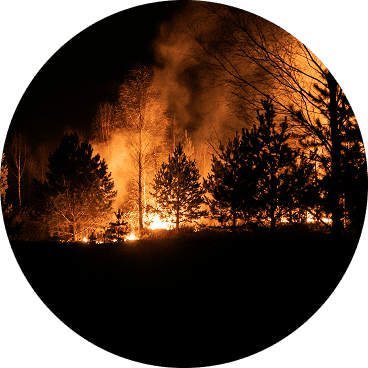
Over 70,000 wildfires burn in the U.S. every year.
Wildfire smoke can travel 1,000+ miles, affecting states that aren't even near the blaze.
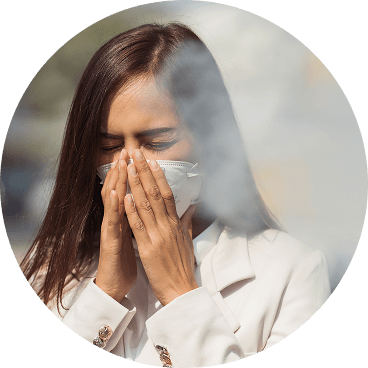
Exposure to wildfire smoke can worsen asthma, trigger heart issues, and lead to ER visits.
Indoor air can hold more fine particles during wildfire events unless it's properly filtered.
The EPA advises using MERV 13 filters or portable HEPA air cleaners during wildfire smoke events.
Use the live wildfire smoke tracker and upgrade your air filters today to protect your lungs and your home.
Shop Filters For Smoke Protection
Author: Michelle Wan, Brand Manager and Air Quality Writer, Filterbuy
Reviewed by: David Clark, Licensed HVAC Technician, Filterbuy
Published: July 28, 2026
Updated: July 28, 2026
You saw haze over Honolulu and want to know whether something is burning. The live map answers that now: active fire detections on Oʻahu, smoke direction, and the PM2.5 reading nearest you.
Most hazy days here have no local fire at all. You are breathing vog, volcanic haze carried 200 miles from Kīlauea. The American Lung Association’s 2026 State of the Air report lists Urban Honolulu among the cleanest metros in the country, which is exactly why households here have no routine for the days the air turns. Smoke and vog look alike, share one pollutant, and call for different responses at home.
Hawaiʻi burns about 0.5% of its land area yearly, equal to or more than any other U.S. state, and over 98% of those fires are human-caused, per the Honolulu Fire Department.
Wildland fire season in Hawaiʻi runs year-round. HFD recognizes no closed season.
Kīlauea has erupted episodically since December 23, 2024, releasing 1,000–5,000 tonnes of sulfur dioxide daily even between fountaining episodes, per USGS.
An N95 filter filters smoke particles but not sulfur dioxide gas. A MERV 13 filter captures the fine particles in both hazards; neither comes into contact with the gas.
Three layers are stacked on the map above: satellite fire detections, modeled smoke plumes, and ground PM2.5 data converted to the EPA Air Quality Index. Read them in that order. A fire icon means a heat signature was detected, not that a fire is out of control.
Confirm any incident with the Honolulu Fire Department or Honolulu DEM. If the fire layer is empty and the AQI is still climbing, you are looking at vog. Haze arriving from the southeast in light or southerly winds is almost always volcanic.
Honolulu is the only major U.S. metro where volcanic haze and wildfire smoke compete to cause a bad-air day. They share PM2.5 but differ in smell, source, timing, and what protects you.
Sources: USGS Hawaiian Volcano Observatory; Hawaiʻi Department of Health; Honolulu Fire Department. Verified July 22, 2026.
Oʻahu’s fires concentrate on the dry leeward side: Waiʻanae, Mākaha, Nānākuli, Makakilo, and the Kunia corridor, where abandoned plantation land has been colonized by invasive guinea grass that cures into fast-burning fuel. Most incidents stay small, and HFD contained a Mākaha brush fire at about two acres in roughly 90 minutes in June 2026.
The risk is concentration, not frequency. Leeward Oʻahu’s 55,000 residents rely on Farrington Highway as their only around-the-clock route out, a concern raised since the 2023 Lahaina fire killed 102 people on Maui. Check Hawaiʻi drought conditions and NWS Honolulu fire weather alongside the map.
Oʻahu’s regulatory monitoring network is small and clustered on the south shore. Per Hawaiʻi DOH air quality data books, continuous stations sit at Honolulu, Kapolei, and Sand Island; Pearl City’s PM2.5 sampling ended March 31, 2022. That leaves a million people with three regulatory monitors, none in the leeward valleys where the brush actually burns. Readings are published on the DOH ambient air quality map.
If you live in Waiʻanae, Mākaha, Nānākuli, or Mililani, the nearest official reading may be 10–20 miles away in different air. Low-cost networks like PurpleAir fill gaps but lose accuracy at high smoke levels. Your eyes and nose remain valid instruments: if you smell smoke, act rather than wait for a number.
"Everyone here knows to check the AQI. Almost nobody knows that the number they’re checking might be coming from a monitor twenty miles away, on the other side of the island, breathing completely different air."
-Michelle Wan, Brand Manager and Air Quality Writer, Filterbuy
Match your response to the AQI above, then confirm against AirNow Hawaiʻi.
Category colors follow Filterbuy brand status colors. The official U.S. EPA AQI scale uses green, yellow, orange, red, purple, and maroon. Source: U.S. EPA AirNow.
Close the envelope first. Shut windows, doors, and any whole-house or attic-fan intake, which otherwise pulls in the air you are avoiding. EPA clean room guidance covers sealing one room.
Then filter what is inside. CDC guidance points to MERV 13 or higher where the system allows, because a higher MERV rating captures more fine particles. Set the fan to ON, not AUTO, so air keeps cycling through the MERV 13 filter between cooling cycles.
Know the limit. Filtration removes particles, not sulfur dioxide gas. Staying indoors with the house closed is the primary defense Hawaiʻi DOH recommends. Oʻahu filters also load faster in year-round humidity, so check monthly during vog events or use auto-delivery.
Only about 57% of Hawaiʻi homes use air conditioning, per U.S. Energy Information Administration survey data, and much of Honolulu’s older housing has jalousie windows: louvered slats built to let trade winds through, which means they cannot seal. If that is your home, the standard advice to close up and run your HVAC does not apply.
Filterbuy sells HVAC filters. If your home has no ducted system, a MERV 13 has nothing to fit into, and we would rather say that than sell you one.
Defend one room. The smallest you can occupy for hours, fewest jalousies.
Run a portable HEPA cleaner sized to that room. It does the work a central filter would, and moves with you if you rent.
Crank jalousies fully closed anyway. Closed leaks far less than open, and the difference is free.
Set window AC units to recirculate, not fresh-air intake. Most have a vent lever on the housing.
No budget for a purifier? The box-fan-and-filter setup in EPA’s clean room guide is a reasonable stand-in.
After a decade of manufacturing filters in our own U.S. plants and serving more than two million households, the thing I would tell a family on Oʻahu is what our product does not do. MERV 13 captures the fine particles in vog and wildfire smoke both. It does not touch sulfur dioxide. Anyone selling you a filter as a vog solution is overselling it.
David Heacock, Founder and CEO, Filterbuy
AirNow Fire and Smoke Map (U.S. EPA). Fire detections, plumes, and PM2.5 in one view.
Honolulu Department of Emergency Management. Evacuation tiers, shelters, and HNL Alert signup.
USGS Hawaiian Volcano Observatory. Daily Kīlauea status and SO₂ emission rates.
Interagency Vog Information Dashboard. Vog and wind forecasts the general AQI maps do not carry.
Hawaiʻi DOH Ambient Air Quality Map. Raw readings from state monitors, including SO₂.
Honolulu Fire Department: Use Hawaii Wildfire Management Organization’s Ready, Set, Go! Wildfire preparedness resource for action-planning guidance, evacuation preparation, home-hardening tips, and a defensible-space checklist.
NWS Honolulu Fire Weather. Red Flag Warnings, the clearest signal before smoke appears.
Over 98% are human-caused, per the Honolulu Fire Department; Honolulu DEM puts it at 99%, "mostly by accident."
Both agencies confirm fire season here runs year-round.
Sources: Honolulu DEM
1,000–5,000 tonnes of SO₂ per day during eruptive pauses, across 51 fountaining episodes since December 23, 2024.
Source: USGS Hawaiian Volcano Observatory
Urban Honolulu appears on the American Lung Association’s cleanest-cities lists for ozone and year-round particle pollution.
Hawaiʻi ranks 2nd nationally for fine particle pollution at 4.7 µg/m³, against a U.S. average of 8.8.
This statistic explains the others. Clean air most of the year is why a vog day catches households without a filter, a plan, or a habit of checking.
Check the live map above, then confirm with the Honolulu Fire Department or Honolulu DEM. Satellite detections can lag, so agency confirmation is the record.
Almost certainly vog. Kīlauea releases sulfur dioxide continuously, even between eruptive episodes, per USGS. When trade winds weaken or shift to Kona winds, that haze reaches Oʻahu.
Partly. Filtration captures vog’s sulfate aerosol, but no residential filter removes sulfur dioxide gas. Closing the house and limiting exertion remain primary. Track SO₂ on the Vog Dashboard.
Only about 57% of Hawaiʻi homes use AC. Run a portable HEPA cleaner in one room, close jalousie slats fully, and set any window unit to recirculate.
You have seen what Honolulu’s air is doing right now. Bookmark this page and check it the way you check the surf report. When haze rolls in, whether smoke off the Waiʻanae range or vog off Kīlauea, a Filterbuy MERV 13 filter already in your system beats one you are ordering after the fact.
Written by Michelle Wan, Brand Manager and Air Quality Writer at Filterbuy, and technically reviewed by David Clark, Licensed HVAC Technician. Filterbuy is a family-owned American manufacturer that has made air filters in the USA since 2013, with factories in Alabama, Florida, Pennsylvania, and Utah.
Filterbuy sells air filters, and that interest is disclosed. Product guidance here is limited to what independent agency sources support. For emergencies, defer to Honolulu DEM and Hawaiʻi DOH. Filterbuy reviews this page monthly during fire season and after any change in Kīlauea’s status. Last verified July 23, 2026. See also our Honolulu live AQI map.
Vog: Volcanic smog: sulfur dioxide gas plus fine sulfate aerosol from Kīlauea, carried downwind as far as Oʻahu.
PM2.5: Fine particles 2.5 microns or smaller, common to both smoke and vog, small enough to reach deep lung tissue.
SO₂: Sulfur dioxide, a colorless irritant gas. Filters and masks do not remove it.
Kona winds: Southerly winds replacing the normal northeast trades, pushing vog toward Oʻahu.
MERV: Minimum Efficiency Reporting Value, the ASHRAE 52.2 filter scale from 1 to 16.
Subscribe to wildfire smoke alerts for Honolulu, HI, to get a heads-up before the next event reaches your area.