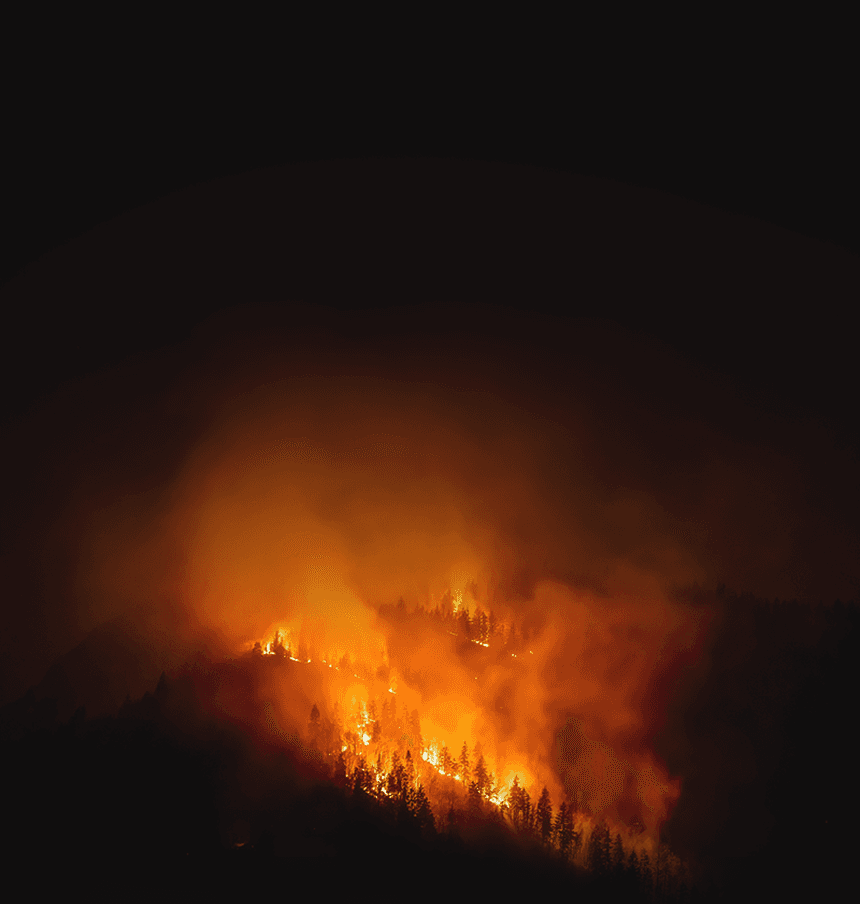
The moment a wildfire starts near you, you'll get an instant alert and simple tips to reduce your smoke exposure.
30xSmaller than a human hair
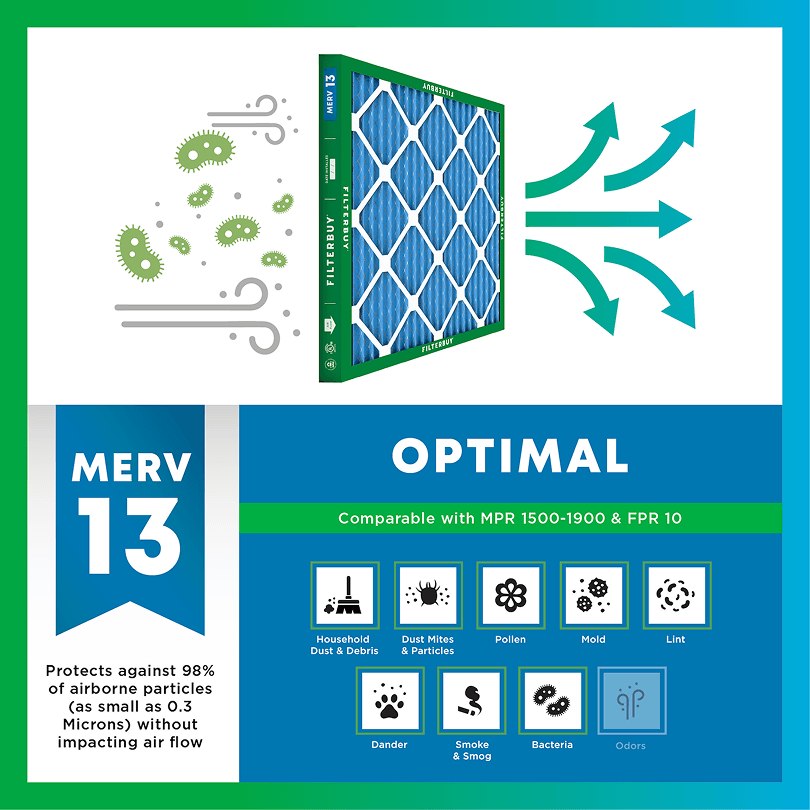
Fine enough to reach deep into the lungs. A MERV 13 is built to capture it.
It Doesn't Stay Local
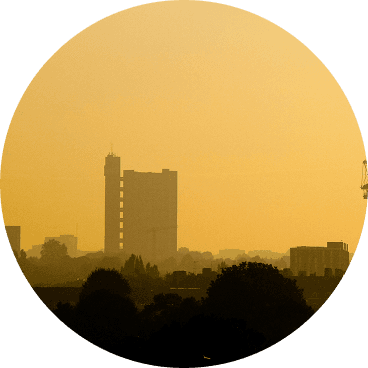
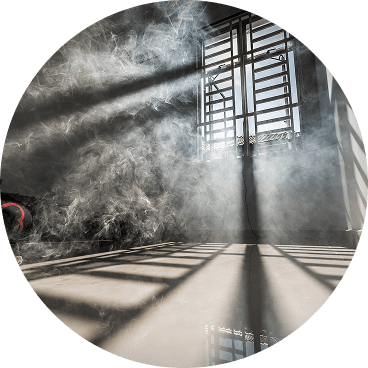
Smoke rides the wind far downwind — you can get smoky air with no fire nearby.
Simple steps to reduce indoor exposure.
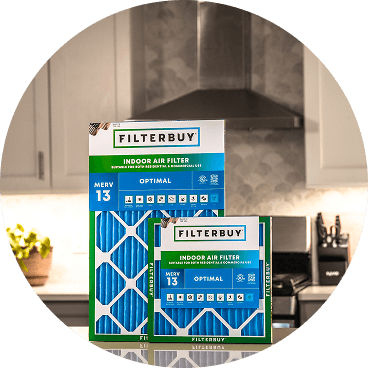
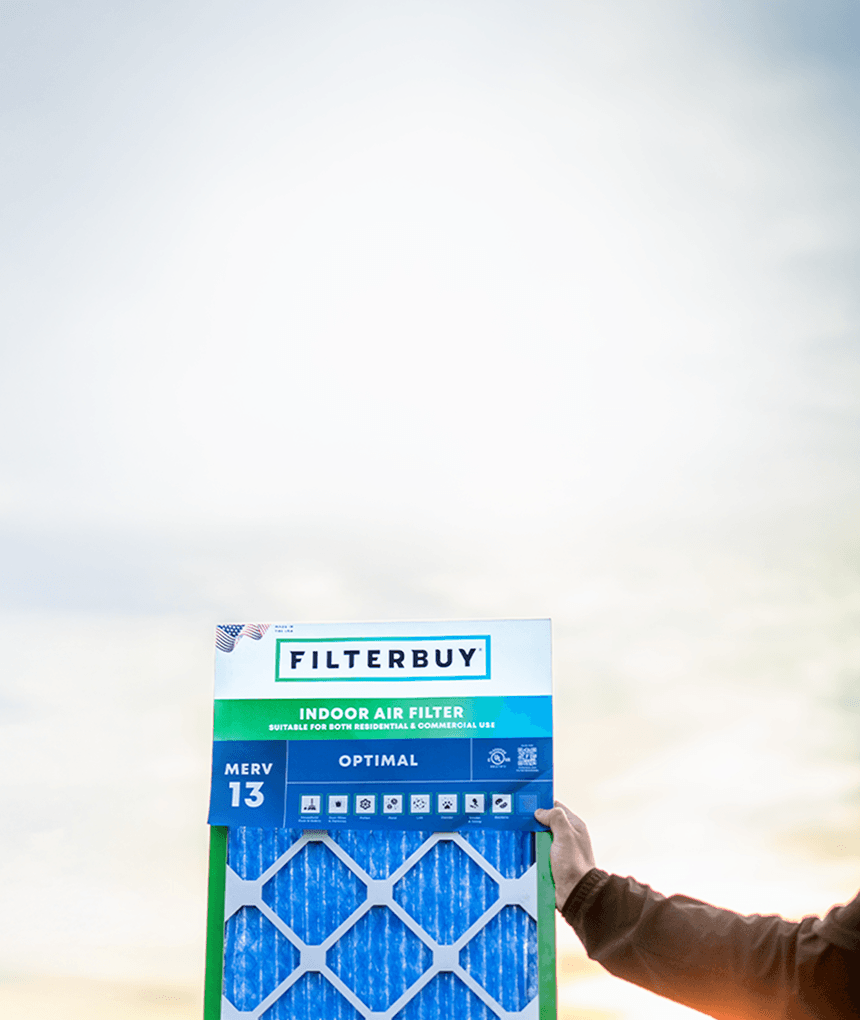
During smoke events, the EPA recommends upgrading to a MERV 13 filter — or the highest-rated filter your system can handle — to help reduce the fine particles smoke brings indoors. MERV 13 is the level most home HVAC systems can run while still capturing PM2.5, the fine particulate that makes up the bulk of wildfire smoke.
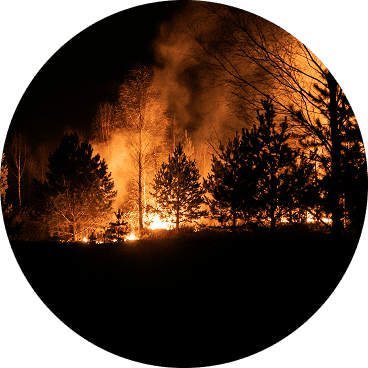
Over 70,000 wildfires burn in the U.S. every year.
Wildfire smoke can travel 1,000+ miles, affecting states that aren't even near the blaze.
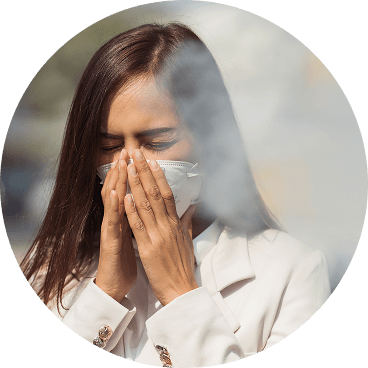
Exposure to wildfire smoke can worsen asthma, trigger heart issues, and lead to ER visits.
Indoor air can hold more fine particles during wildfire events unless it's properly filtered.
The EPA advises using MERV 13 filters or portable HEPA air cleaners during wildfire smoke events.
Use the live wildfire smoke tracker and upgrade your air filters today to protect your lungs and your home.
Shop Filters For Smoke Protection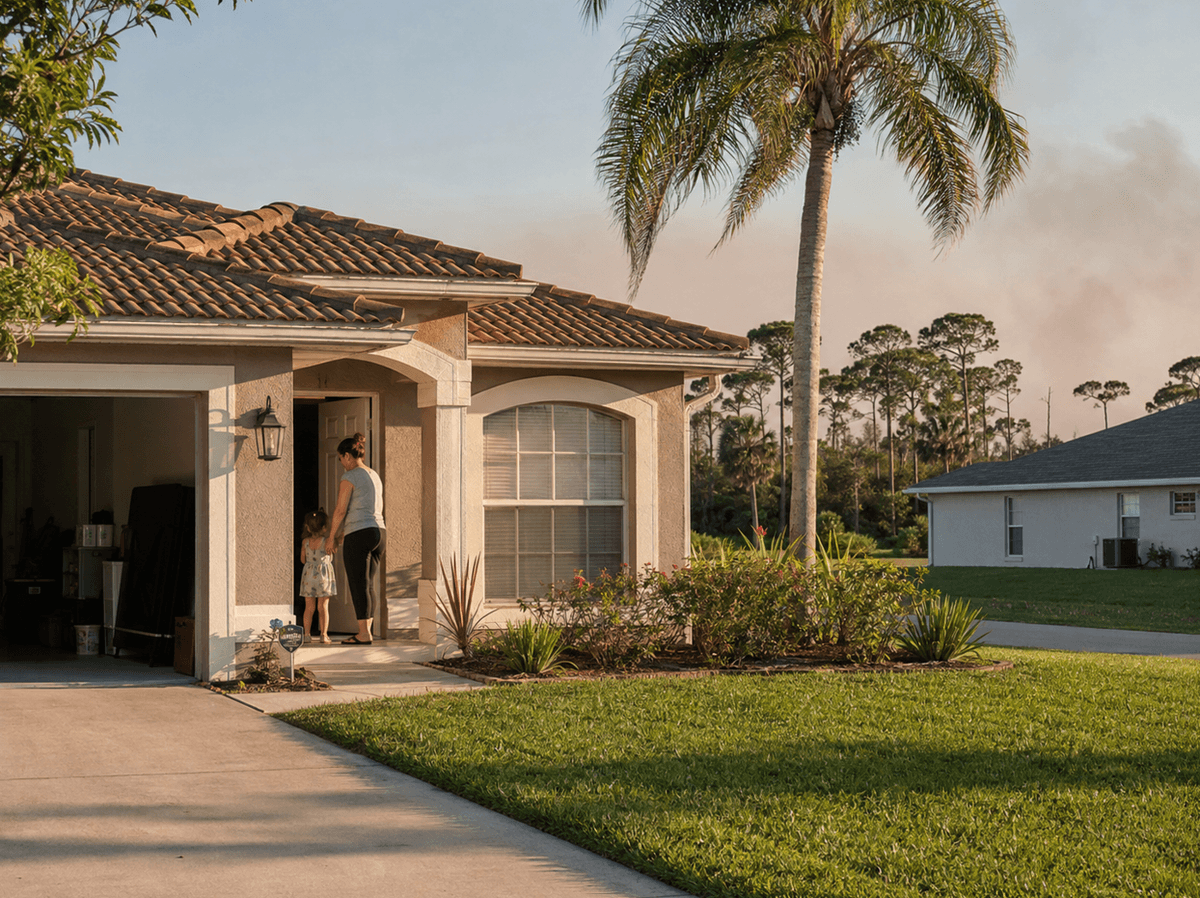
By Michelle Wan, Brand Manager & Air Quality Writer
Reviewed By: David Clark, Licensed HVAC Technician
Published: August 15, 2026 | Updated: August 15, 2026
Cape Coral rarely sees a forest wildfire inside city limits, and August falls in the wet season, the calmest stretch of the year for fire here. Risk climbs from January through June, when the dry season cures inland fuels and prescribed burns run east of the river. Check the live map above, and if a plume is headed your way, close the house and run a MERV 13 filter.
Florida's fire season is inverted compared to the West, climbing in January and peaking in May and June. August is usually the quietest month.
Most smoke over Cape Coral is not from a megafire. Florida leads the nation in prescribed burning, much of it in pine flatwoods just inland of Lee County.
Cape Coral seldom has the fire; it gets the smoke, which arrives on the wind from Lehigh Acres, Alva, Babcock-Webb, Big Cypress, and Hendry County.
A clear map does not mean clear air. Muck fires smolder underground with a heat signature satellites can miss, so if you smell smoke and the map is empty, trust your nose.
Check the live map above for the current answer. On a typical day, no forest wildfire burns inside Cape Coral itself, and anything you see will be inland. The map pulls in every satellite-detected heat signature, every reported Florida Forest Service incident, and the modeled smoke plume within roughly 75 miles. Red and orange markers are active detections; gray shading is forecast smoke, which drifts well beyond the fire. The AQI figure comes from the nearest EPA-referenced monitor in Lee County. We publish it because we ship filters into Southwest Florida from our Orlando distribution center, and customers here kept asking the same thing: not what the air quality is, but whether something is actually burning.
One caution: satellite detection cannot tell a wildfire from an authorized prescribed burn, and on a dry-season afternoon here, most of what lights up the map is planned land management, not an emergency. For confirmed incident status, the Florida Forest Service Caloosahatchee Forestry Center, which covers Lee County, is the authority, and Florida DEP publishes a statewide map of every air monitoring site.
For air quality beyond smoke, see our live Cape Coral AQI tracker.
Because Florida's fire calendar runs upside down compared with California's. It tracks the dry season, climbing through January and peaking in May and June per the Florida Department of Agriculture and Consumer Services, and then summer thunderstorms soak the fuels back down. Almost no national smoke map explains this.
Florida fire season timing per the Florida Forest Service; Western season timing per NIFC seasonal outlooks.
A mild year still has teeth: Southwest Florida saw active fires from Sarasota through Lee, Charlotte, and Hendry counties in June 2026, and nearly 40 counties sat under burn bans at that peak, per the state's May 2026 wildfire briefing.
Check conditions before you plan your day on the live Cape Coral AQI map.
Every Cape Coral reader who writes to me about smoke assumes they are living through a Western fire season on a delay. They are not. The calendar here runs the other way, so you stop bracing for August and start prepping in December. The mistake I see most is buying a MERV 13 during a smoke event, when the useful move was buying two in October and keeping the spare on the shelf.
Michelle Wan, Brand Manager and Air Quality Writer, Filterbuy
Almost always from inland, east or north of the city. Cape Coral has canals and homes with little wildland fuel of its own, so the fire is somewhere else, and the wind decides whether you smell it.
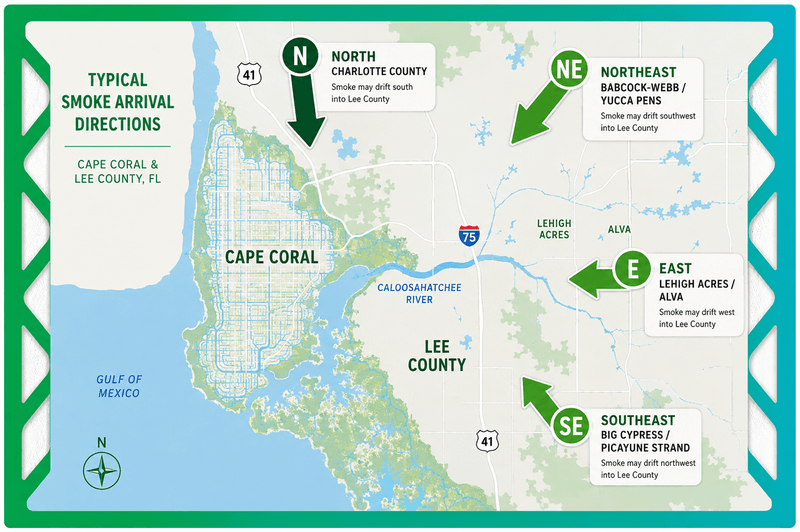
Check wind direction alongside the live map above. Smoke settles into low-lying neighborhoods after sunset.
Two things can leave the map quiet while your lanai says otherwise.
The first is muck fire. When drought pulls the water table down, organic soil beneath drained wetland can ignite and burn below the surface, and UF/IFAS reports these fires can smolder for weeks or months, persisting until heavy rain re-floods the basin. Burning without a flame front, they give off a weak heat signature that satellite detection can miss, and ground-fire smoke gets little lift from daytime convection, so it settles after dark. That is how a muck fire stays invisible at noon and unbreathable on your lanai at ten. Florida emergency management notes muck fires were rarer before drainage, when low-lying ground stayed wet year-round.
The second is simpler: AQI comes from a handful of fixed monitors across a large county, and smoke is patchy, so a reading six miles upwind is not your street.
Which leads to advice that runs against our own map. If you smell smoke and the map looks clear, believe your nose, treat it as a multi-day event, and change the filter when it loads, not on schedule.
You do not need to watch a fire map all day. Three numbers tell you where you stand.
AQI. From the live map above. Over 100, sensitive groups should limit outdoor exertion: children, older adults, and anyone managing asthma, COPD, or heart disease. Over 150, that applies to everyone.
KBDI. Lee County's daily Keetch-Byram reading. Below 400 means damp ground; above 600, the soil is primed, and any ignition burns hotter and longer.
Wind direction. Anything easterly points inland fuels at Cape Coral.
Two or three trending the wrong way is your cue to change the filter and keep a spare on the shelf.
Seal the house and filter the air already inside it. We have made pleated filters since 2013, and the failure we see most is not the wrong rating; it is the right rating installed too late, or left in until it stops moving air.
Close it up. Windows and doors shut, AC on recirculate.
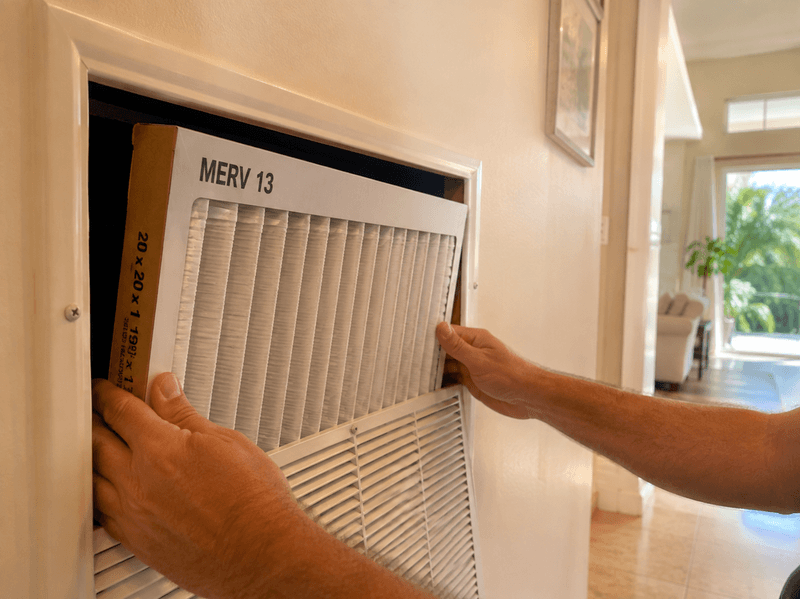
Install a MERV 13 filter. It captures the fine PM2.5 that a MERV 8 does not. Shop MERV 13 air filters.
Set the fan to "On," not "Auto." Air only gets filtered when the blower runs.
Make one clean room. Pick the bedroom, shut the door, and add a portable HEPA cleaner sized for it. The EPA has clean room guidance.
Mask up if you go out. A fitted N95 or KN95 filters smoke particles; cloth and surgical masks do not.
Stop adding particles, and watch the filter. No candles, frying, or vacuuming without a HEPA bag, and replace the filter when it looks dark.
MERV 13, in almost every Cape Coral home. It is the lowest rating that reliably captures smoke-sized particles and still fits a residential system. Two guides go deeper: the best MERV filter for smoke compares the ratings, and MERV 13 versus HEPA explains why true HEPA cannot run in most residential blowers.
The EPA recommends MERV 13 or higher during smoky periods, provided the filter is replaced frequently.
Most Lee County homes can run a MERV 13 without any trouble. What causes problems isn't the rating; it's a one-inch filter in an undersized return, or a filter left in past its life. If you hear whistling at the return grille or the system starts running longer to hit the same temperature, that's static pressure talking. Get it looked at before you blame the filter.
David Clark, Licensed HVAC Technician
The Florida Forest Service authorizes about 88,000 prescribed burns a year across more than 2.1 million acres, more than any other state, so most of what smells like wildfire here from October to May is scheduled. See the Florida Forest Service prescribed fire program.
Florida recorded more than 2,100 wildfires across roughly 136,000 acres between January and late May 2026, nearly all before the summer rains. See current Florida Forest Service wildfire reporting for today's totals.
One in four Cape Coral residents is 65 or older, per U.S. Census Bureau QuickFacts, a group the EPA lists among those most susceptible to fine particles, so a smoke day matters more here than the AQI suggests.
Most likely a prescribed burn if it falls between October and May. Much of the land east and north of Lee County is managed pine flatwoods, where burns are authorized and monitored, usually finishing within a day.
Yes. Run it on recirculate with a MERV 13 filter and the fan set to "On." In Florida's heat, shutting the system off is unsafe as well as counterproductive.
Stay indoors with the AC on recirculate and a MERV 13 filter, keep rescue medication within reach, and follow the action plan your provider gave you. If symptoms escalate or medication is not holding them, contact your provider rather than waiting it out.
Yes. Florida homes leak air around doors, attics, and duct joints, and smoke odor is partly gases that no filter captures, so filtration cuts particles while sealing cuts the smell.
Smoke gives Cape Coral little warning, so start with the live Cape Coral AQI map, then check what your filter can stop with the best MERV filter for wildfire smoke. Filterbuy builds MERV 13 filters in the USA in more than 600 sizes plus custom, shipped factory-direct, so you can find your size and set up auto-delivery before January's first burn catches you running a loaded one.
Better Air For All.
AQI (Air Quality Index). The EPA's 0-500 scale for daily air quality across five regulated pollutants.
HEPA (High-Efficiency Particulate Air). A standard removing at least 99.97% of 0.3-micron particles, used in portable air cleaners but too restrictive for most home HVAC.
KBDI (Keetch-Byram Drought Index). A 0-800 scale estimating moisture deficit in the top eight inches of soil. Higher means drier ground and a harder-to-suppress fire.
MERV (Minimum Efficiency Reporting Value). A scale rating how well a filter captures particles. Higher numbers capture smaller ones.
Muck fire. A fire smoldering in dried organic soil below the surface, common in drained South Florida wetlands.
Subscribe to wildfire smoke alerts for Cape Coral, FL, to get a heads-up before the next event reaches your area.