The moment a wildfire starts near you, you'll get an instant alert and simple tips to reduce your smoke exposure.
30xSmaller than a human hair
Fine enough to reach deep into the lungs. A MERV 13 is built to capture it.
It Doesn't Stay Local
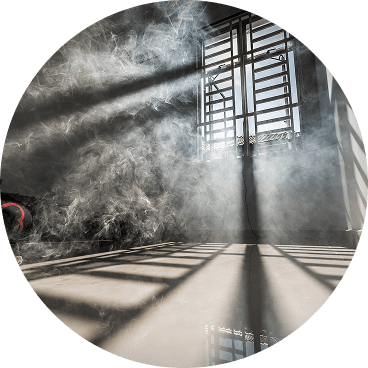
Smoke rides the wind far downwind — you can get smoky air with no fire nearby.
Simple steps to reduce indoor exposure.
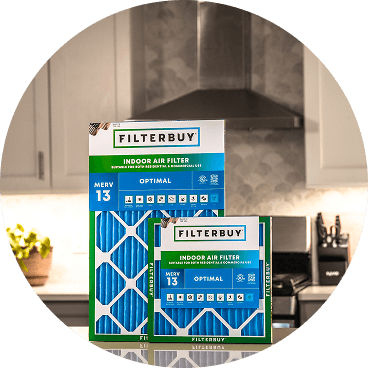
During smoke events, the EPA recommends upgrading to a MERV 13 filter — or the highest-rated filter your system can handle — to help reduce the fine particles smoke brings indoors. MERV 13 is the level most home HVAC systems can run while still capturing PM2.5, the fine particulate that makes up the bulk of wildfire smoke.

Over 70,000 wildfires burn in the U.S. every year.
Wildfire smoke can travel 1,000+ miles, affecting states that aren't even near the blaze.
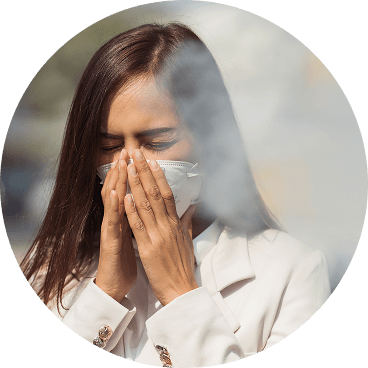
Exposure to wildfire smoke can worsen asthma, trigger heart issues, and lead to ER visits.
Indoor air can hold more fine particles during wildfire events unless it's properly filtered.
The EPA advises using MERV 13 filters or portable HEPA air cleaners during wildfire smoke events.
Use the live wildfire smoke tracker and upgrade your air filters today to protect your lungs and your home.
Shop Filters For Smoke Protection
By Michelle Wan · Technically reviewed by David Clark, Licensed HVAC Technician · Published August 22, 2026 · Updated August 22, 2026
Check South Dakota smoke conditions on the AirNow Fire and Smoke Map paired with a DANR monitor reading. Most smoke reaching the state is transported from the Pacific Northwest, the Northern Rockies, and Canada rather than produced locally. Indoors, the Environmental Protection Agency recommends a MERV 13 filter on a continuous fan.
DANR monitors PM2.5, particulate matter 2.5 micrometers or smaller, at nine sites. None sit in the northwest quarter of the state.
Most South Dakota smoke days originate outside the state, carried east by westerly winds from Washington, Oregon, Montana, Idaho, and Canada.
The EPA recommends a MERV 13 or higher filter during smoky periods, with the thermostat fan switched from Auto to On.
Black Hills timber fire and prairie grass fire behave differently and need different filter timing.
Four sources cover live South Dakota conditions. The AirNow Fire and Smoke Map is the one to open first, layering fire detections over ground-level fine particle readings statewide. InciWeb covers any single large fire. DANR publishes hourly PM2.5 from the state network, and the National Weather Service in Rapid City forecasts fire weather and dispersal.
South Dakota operates nine PM2.5 monitors and none sit in the northwest quarter of the state. DANR reports from Rapid City, Wind Cave, Badlands, Pierre, Aberdeen, Watertown, Brookings, Sioux Falls, and Vermillion. Harding, Perkins, Butte, Corson, Ziebach, and Dewey counties sit farthest from one.
Monitor sites per South Dakota DANR. Gap assessment and fallbacks are Filterbuy analysis.
A monitor only describes the air where it stands, so in the northwest the closest dot may report a county away. With nothing near you on the map, use the 5-3-1 visibility index published by the Oregon Department of Environmental Quality and recommended by OSHA. Under five miles of visibility, sensitive groups should cut outdoor activity; under three miles everyone should, and under one mile nobody.
South Dakota smoke arrives in three patterns, each calling for a different indoor response. Transported regional smoke settles in for days, so filtration has to be sustained. A local Black Hills fire brings heavier smoke from closer range and loads a filter faster. A prairie fire is a short spike, often over in an afternoon.
Filterbuy built this triage because the standard advice, change your filter every 90 days, assumes a normal year. In smoke, loading tracks density and duration instead.
The AirNow map number is not a raw hourly reading. AirNow reports a NowCast value, a weighted average of roughly the previous twelve hours. That stops one noisy hour from triggering a false alarm, and it also means a sudden plume arrives softened.
The lag matters most for a prairie fire, which delivers the sharp spike a twelve-hour average flattens. If the horizon has gone brown and the air smells like a campfire, close the house and start the fan without waiting for the map.
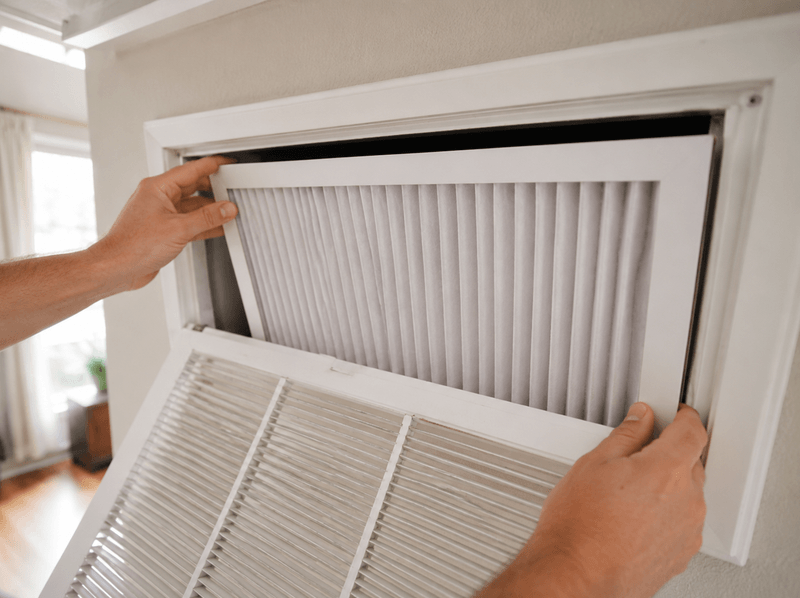
Transported smoke, not local fire, drives most South Dakota air quality alerts. State fire meteorologist Darren Clabo attributed most 2026 smoke over western South Dakota to fires in Washington, Oregon, Montana, and Idaho. Plume height decides what you breathe, since high smoke hazes the sky without moving ground readings, while smoke mixing to the surface pushes the AQI up.
Timber and grass produce different smoke on different schedules. Ponderosa pine in the Black Hills National Forest gives off dense, long-lived smoke through a May to October season, while cured prairie grass east of the Hills burns fast under wind and is through quickly.
The 2026 season showed both. The Qury Fire ignited March 12 near Custer, merged with the Deer Fire, and reached roughly 9,100 acres of timber, forcing evacuations and damaging ten properties.
The Air Quality Index translates fine particle concentration into a health category. The EPA revised the PM2.5 breakpoints effective May 6, 2024, so a 24-hour average above 9.0 micrograms per cubic meter is Good, and 35.5 begins Unhealthy for Sensitive Groups.
Micrograms per cubic meter, 24-hour values. The AirNow map shows a NowCast estimate, not a raw hourly reading.
Sensitive groups include children, adults over 65, people who are pregnant, and anyone with asthma, COPD, or heart disease. Fine particles reach the lungs and heart and trigger asthma attacks in this group first.
These seven actions reduce indoor smoke exposure, in order of impact. The EPA reports a high-efficiency filter may cut indoor PM2.5 by roughly half on a continuous fan.
Close windows and exterior doors until smoke clears.
Set the HVAC fan from Auto to On so air keeps moving through the filter.
Install a MERV 13 filter, or the highest rating your system allows.
Close the fresh air intake, or set the system to recirculate.
Set up a cleaner air room with a portable air cleaner sized to it.
Skip candles, gas and wood stoves, aerosol sprays, frying, and unsealed vacuuming.
Inspect the filter every two weeks and replace it when pleats darken.
A box fan taped to a MERV 13 filter is a real option, and Filterbuy would rather you know that than go without. EPA research found do-it-yourself cleaners built this way cut wildfire smoke in the laboratory and in smoke-affected homes. Use a fan made in 2012 or later with a UL or ETL mark, and never run an older one unattended.
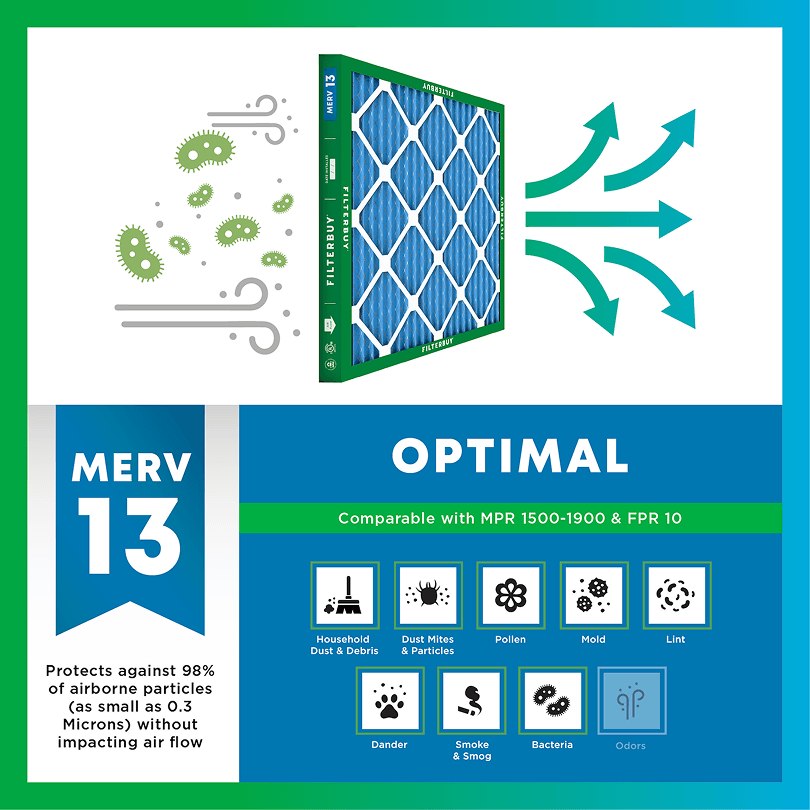
MERV 13, on the ASHRAE Standard 52.2 scale, is the EPA recommendation for wildfire smoke, and Filterbuy, which manufactures pleated filters, agrees with that ceiling. It captures a meaningful share of the fine particles that make smoke hazardous while still passing enough air for a standard residential blower.
A MERV 13 filter captures the fine particulate that drives the AQI and most of the health risk, but does nothing for the carbon monoxide, benzene, and formaldehyde traveling with a plume. Activated carbon adsorbs some and handles odor, but removes no carbon monoxide, which is why a CO alarm belongs in any home running combustion appliances through smoke.
MERV 13 is also not True HEPA. The EPA describes a layered approach: a MERV 13 in the central system plus a portable HEPA cleaner in the bedroom. See MERV 13 with True HEPA media for smoke. Older PSC blower motors can struggle with the resistance, so a technician can measure static pressure for the highest rating your system supports.
The filter people already own is usually the wrong one for the week they need it most. After manufacturing filters for over a decade, the August pattern is always the same. Families close the windows, which is right, then leave a MERV 8 in the slot, which leaves the fine particles circulating. Match the filter to the air outside.
David Heacock, Founder and CEO, Filterbuy
Rapid City and Spearfish rank 53rd worst nationally for short-term particle pollution; the daily spikes in smoke causes, per the American Lung Association State of the Air report.
A high-efficiency HVAC filter may cut indoor PM2.5 by about 50 percent on a continuous fan, per EPA guidance on reducing indoor smoke exposure.
Wildland fire accounts for 44 percent of primary PM2.5 emissions nationally; wildfire alone 29 percent, per the federal particulate matter standards rule.
Smoke conditions change daily. South Dakota DANR real-time monitoring page gives hourly values, and National Weather Service fire weather forecasters in Rapid City track the winds carrying western smoke across the state. Filterbuy's live wildfire and smoke map shows the national picture.
Yes, in most cases. Central air conditioning recirculates and filters indoor air rather than pulling in outdoor air. Close any fresh air intake, set the fan to On, and confirm the filter is clean.
Inspect rather than schedule. The EPA advises replacing the filter when it looks dark brown or black, which under heavy smoke arrives well before the normal interval. Filterbuy recommends checking every two weeks during an active smoke stretch.
Yes. DANR issues alerts with the Department of Health when smoke is forecast to settle over the state, advising limited outdoor exertion and closed windows.
Smoke does not give much notice. The households that ride out a haze week comfortably had the right filter in the slot beforehand. Fit a MERV 13 pleated filter before smoke season and keep a spare.
Subscribe to wildfire smoke alerts for South Dakota to get a heads-up before the next event reaches your area.