The moment a wildfire starts near you, you'll get an instant alert and simple tips to reduce your smoke exposure.
30xSmaller than a human hair
Fine enough to reach deep into the lungs. A MERV 13 is built to capture it.
It Doesn't Stay Local
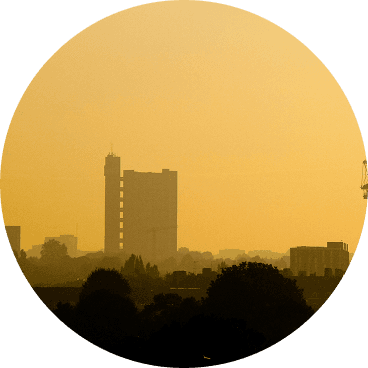
Smoke rides the wind far downwind — you can get smoky air with no fire nearby.
Simple steps to reduce indoor exposure.
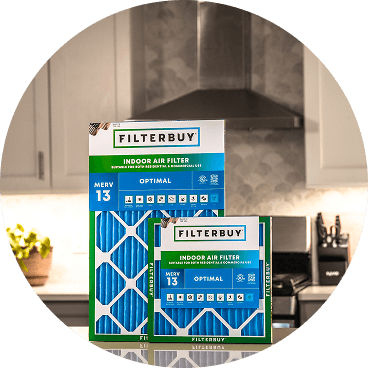
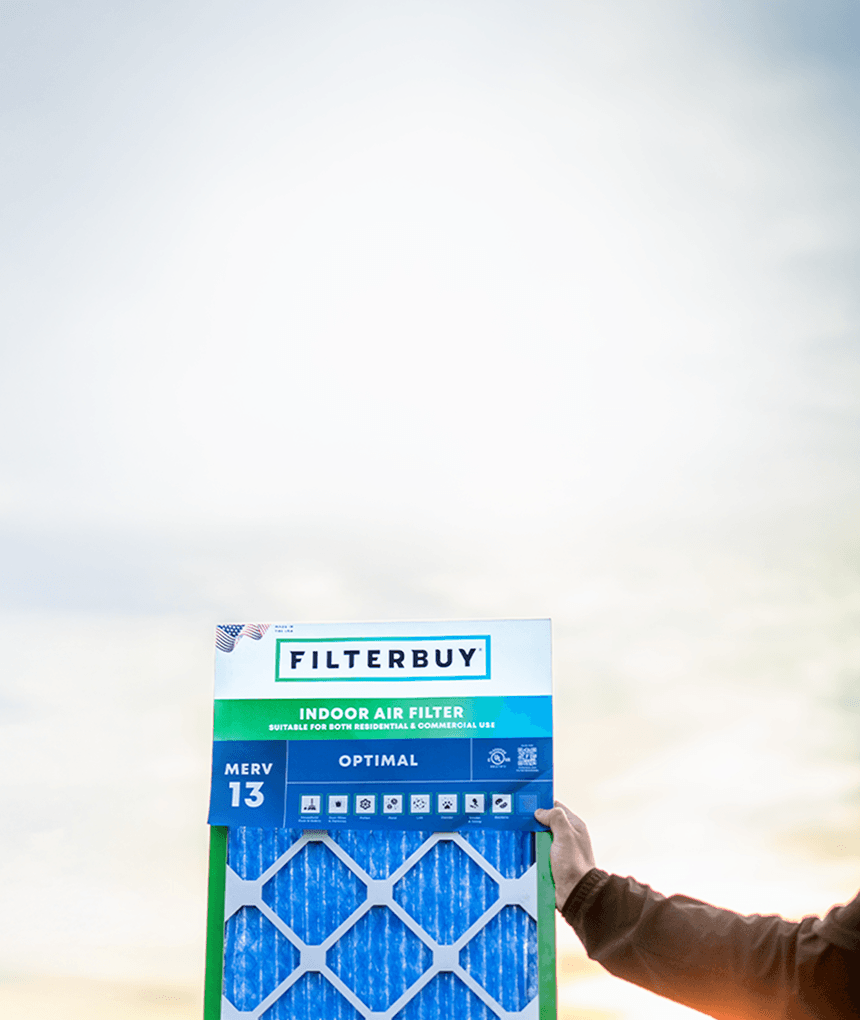
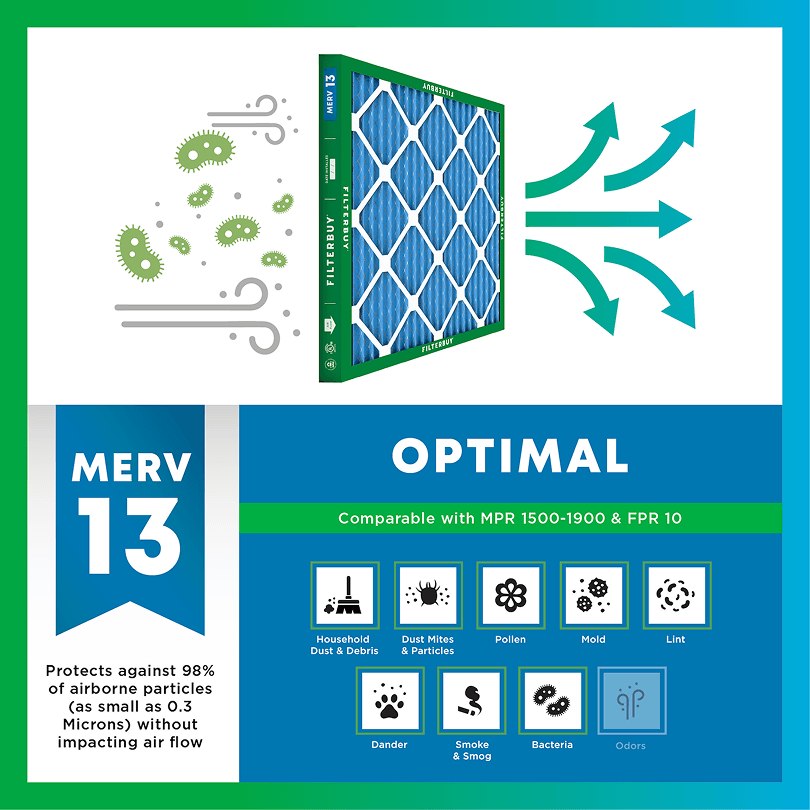
During smoke events, the EPA recommends upgrading to a MERV 13 filter — or the highest-rated filter your system can handle — to help reduce the fine particles smoke brings indoors. MERV 13 is the level most home HVAC systems can run while still capturing PM2.5, the fine particulate that makes up the bulk of wildfire smoke.
Over 70,000 wildfires burn in the U.S. every year.
Wildfire smoke can travel 1,000+ miles, affecting states that aren't even near the blaze.
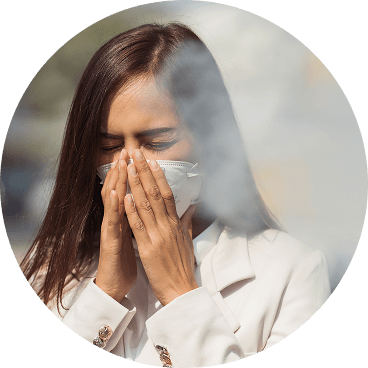
Exposure to wildfire smoke can worsen asthma, trigger heart issues, and lead to ER visits.
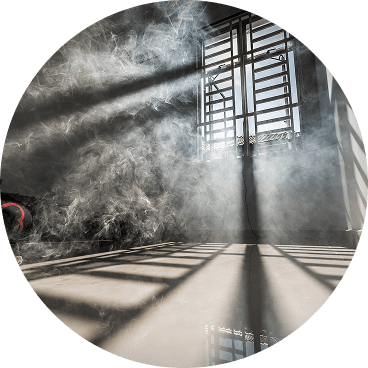
Indoor air can hold more fine particles during wildfire events unless it's properly filtered.
The EPA advises using MERV 13 filters or portable HEPA air cleaners during wildfire smoke events.
Use the live wildfire smoke tracker and upgrade your air filters today to protect your lungs and your home.
Shop Filters For Smoke Protection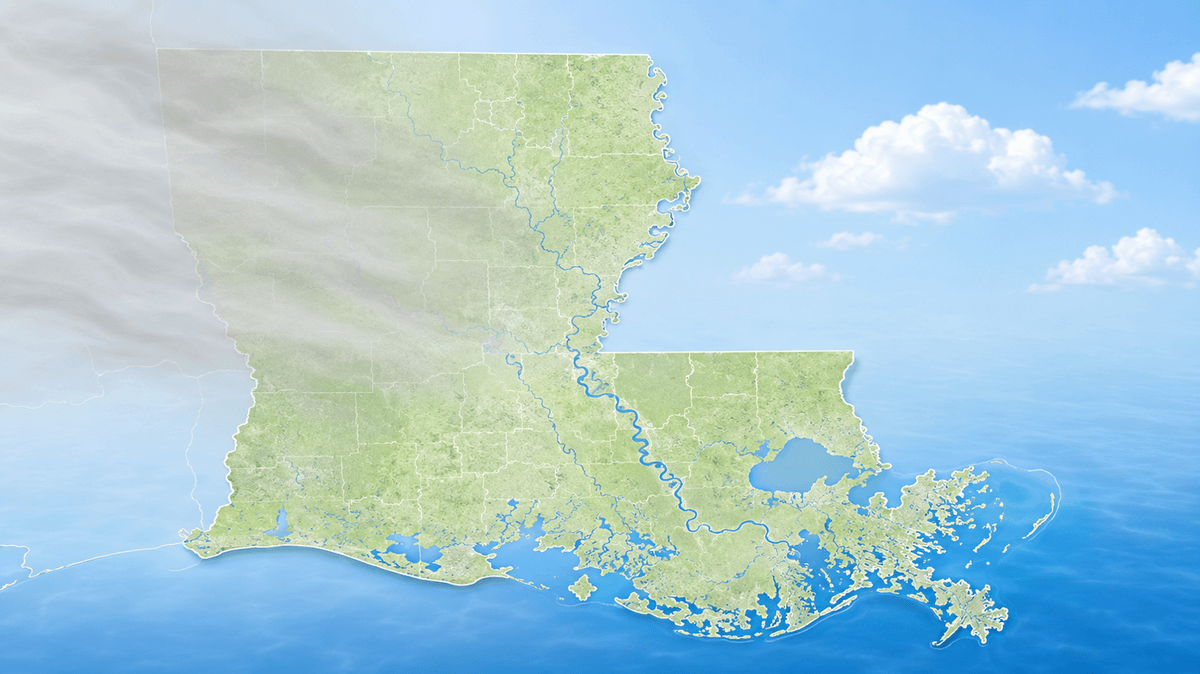
Author: Michelle Wan, https://filterbuy.com/author/michelle-wan/
Reviewer: David Clark, Licensed HVAC Technician
Publish Date: July 27, 2026
Updated Date: July 27, 2026
Filterbuy's live map layers three types of live data over Louisiana: fire icons for active wildfire detections, gray shading for smoke forecast to travel, and colored dots for real-time PM2.5 monitors by parish. Zoom into your city to see what is happening in your air right now.
As of July 22, 2026, Louisiana is not in an active wildfire smoke event. The Louisiana DEQ's latest forecast shows Good to Moderate air quality statewide, driven mainly by regional smoke and Saharan dust, not a nearby fire. Use the live map below to confirm conditions in your parish today, and keep a Filterbuy MERV 13 filter on hand for later this season.
Louisiana's statewide air quality is currently Good to Moderate, and no large active wildfires are burning in the state as of this update.
The live map below layers real-time fire detections, smoke plumes, and AQI readings so you can check conditions in your own parish.
Research published in Nature Communications found that PM2.5 from wildfire smoke drives a larger increase in respiratory hospitalizations than PM2.5 from other sources.
The EPA recommends MERV 13 or higher filters during wildfire smoke events, because standard MERV 8 filters do not capture fine smoke particles effectively.
Conditions can shift within hours during fire season, so bookmark this page and recheck it before extended time outdoors.
As of July 22, 2026, Louisiana's air quality sits at Good to Moderate statewide, per the Louisiana Department of Environmental Quality. No large, active wildfires are burning in the state right now. Nationally, NIFC's preparedness level is at its highest tier, since dozens of large fires are burning elsewhere, so resources are stretched even though Louisiana itself is clear. The mildly elevated PM2.5 readings parishes are seeing come mostly from a thin plume of regional smoke and Saharan dust, not a Louisiana wildfire.
Filterbuy has built and maintained this same live-tracking format across dozens of state and city pages, and Louisiana has seen the real thing before. In 2023, drought and extreme heat fueled hundreds of wildfires across the state, prompting a statewide burn ban and air quality warnings from the Louisiana Department of Health. Smoke from fires burning as far away as Minnesota and Canada has also reached the Midwest and Northeast during the summer of 2026, proof that Louisiana's air can be affected by fires the state never sees on the ground. Our national wildfire and smoke map covers every other state, and that same real-time habit is why this page updates by the day instead of describing a single snapshot from the news cycle.
Check the live map above before committing to a long day outside, and check it again if you notice haze, a smoky smell, or a local air quality alert. The National Weather Service office serving New Orleans and Baton Rouge issues fire weather forecasts and red flag warnings when conditions turn dangerous, often before smoke becomes visible at ground level.
Based on the EPA Air Quality Index scale as reported by AirNow and the Louisiana Department of Environmental Quality.
Louisiana's readings can climb with no fire burning nearby, and Saharan dust is usually why. Each summer, the Saharan Air Layer carries dust off Africa across the Atlantic, peaking from late June through mid-August. LSU and Louisiana DEQ researchers found a 2022 Saharan dust event pushed PM2.5 above the federal annual standard at Louisiana monitors including Port Allen, with no fire involved. That is the haze mechanism this map often flags: dust from another continent, not smoke from a wildfire.
Even on a Good to Moderate day, wildfire smoke deserves attention because of how far its particles travel and how easily they slip indoors. Fine particles from wildfire smoke measure 2.5 microns or smaller, small enough to pass through open windows and standard HVAC filtration never designed to stop them. A 2021 Nature Communications study found a 10 microgram per cubic meter increase in wildfire-specific PM2.5 raised respiratory hospitalizations by 1.3 to 10 percent, versus 0.67 to 1.3 percent from other sources. That is why Filterbuy treats wildfire PM2.5 as its own category, not everyday dust.
Children, older adults, pregnant women, and people living with asthma, COPD, or heart disease face the highest risk from that exposure, according to the CDC. Nearly 28 million people in the United States live with asthma, so the households affected by a bad smoke day add up quickly, even in a state that is not the one burning. For a broader look at how PM2.5 and ozone move across the country, our real-time air quality index guide breaks down what each AQI category means for your household.
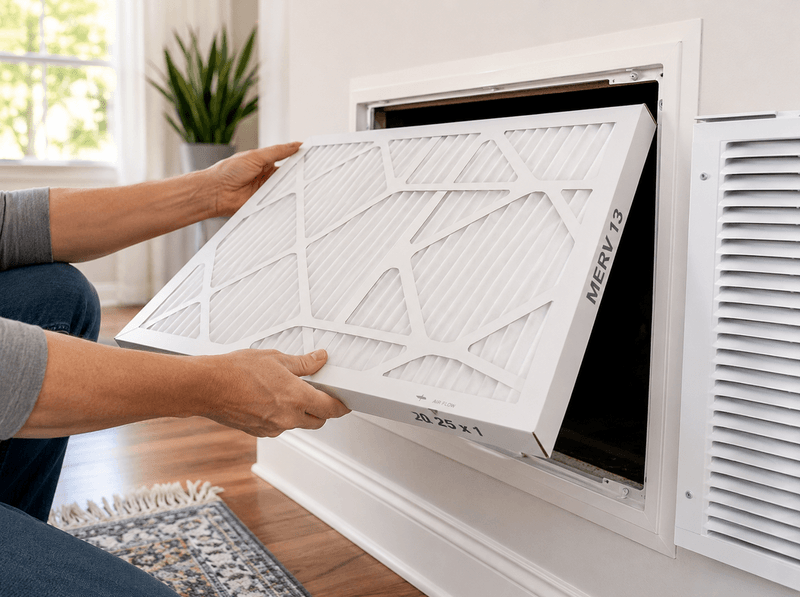
Upgrade to a Filterbuy MERV 13 filter before smoke arrives. The EPA recommends MERV 13 or higher, since it captures far more fine particulate than standard ratings. Run your HVAC fan on ON instead of AUTO so air keeps moving through the filter continuously. Set up one clean room with a portable HEPA cleaner for anyone pregnant, very young, older, or living with asthma or COPD. Skip candles and gas stoves until conditions clear, and switch back once the map shows Good again.
After manufacturing filters for over a decade and serving more than two million households, we see the same pattern every fire season. The households that upgrade before smoke arrives stop thinking about their air. The ones who wait always wish they had upgraded sooner.
David Heacock, Founder and Chief Executive Officer, Filterbuy
Confirm what is happening in your parish right now using the live AirNow Fire and Smoke Map, the same federal tool this page's status update is built on.
Get parish-level ozone and PM2.5 forecasts straight from the Louisiana DEQ Ozone and PM2.5 AQI Forecast, the state's own regulatory source.
Follow the EPA guide to reducing smoke exposure, including the MERV 13 filter recommendation and steps for indoors and outdoors.
See which health conditions raise smoke risk and what symptoms warrant medical attention via the CDC safety guidelines for wildfires and wildfire smoke.
Understand why firefighting resources can be stretched nationally even when Louisiana itself is clear, via the National Interagency Fire Center's National Fire News.
Check red flag warnings and fire weather forecasts for the region from the National Weather Service New Orleans/Baton Rouge fire weather page before conditions turn dangerous.
Prepare an evacuation plan and emergency kit with Ready.gov's official wildfire readiness guide.
1. Wildfire PM2.5 Hits Harder Than Other Pollution
Not all PM2.5 carries equal risk. A 10 µg/m³ rise in wildfire-specific PM2.5 raises hospitalizations 1.3 to 10 percent, versus 0.67 to 1.3 percent for ordinary PM2.5.
Source: Aguilera et al., Nature Communications via PMC.
2. Louisiana's Ozone Pollution Worsened In 2026
Louisiana was 1 of only 7 states where more counties saw ozone worsen than improve, and 1 of 6 states where short-term particle pollution improved nowhere.
Source: American Lung Association, 2026 State of the Air.
3. 28 Million Americans Live With Asthma
That is the population facing the highest amplified risk during wildfire smoke events.
Source: AAFA's Asthma Facts.
Louisiana is clear right now. No active wildfires, air quality at Good to Moderate, and the smoke story of the summer belongs to the Upper Midwest, not the Gulf South.
That is exactly the kind of update most sites skip, because a quiet report does not generate clicks the way an active fire does. My own take, after covering fire and smoke conditions across dozens of Filterbuy's state and city pages this season:
Quiet years cause more trouble than busy ones. When the map stays green for months, filters get pushed past their replacement date and portable air cleaners stay in the closet.
The first hazy afternoon catches people unprepared, and I have watched that pattern repeat state after state.
Louisiana's 2023 burn ban proves it can happen here too.
A MERV 13 filter installed on a clear day in July costs the same as one installed in a panic in October. Only one of those two households is ready.
Check the live map above for your parish. As of this update, no large active wildfires are burning in Louisiana, and statewide air quality is Good to Moderate, but conditions can shift fast during fire season.
The EPA recommends a MERV 13 or higher filter, like Filterbuy's, for capturing wildfire smoke particles indoors. Standard MERV 8 filters do not filter fine particulate as effectively.
Check your AQI reading on the live map above or the Louisiana DEQ. You do not need to see or smell smoke for PM2.5 to be elevated, since fine particles travel hundreds of miles and remain invisible.
Whether Louisiana sees a quiet season or a smoky one, your Filterbuy filter is the last line of defense for the air inside your home. Shop MERV 13 Air Filters and have the right filter on hand before smoke ever shows up on the map.
AQI: The Air Quality Index, a color-coded government scale from 0 to 500 that reports how clean or polluted outdoor air is and the health risk that comes with it.
PM2.5: Fine particulate matter measuring 2.5 microns or smaller in diameter, the main health hazard in wildfire smoke and small enough to reach deep into the lungs.
MERV 13: A high-efficiency Minimum Efficiency Reporting Value rating for home HVAC filters that captures a large share of fine particles, including much of the PM2.5 found in wildfire smoke. It is not a HEPA filter.
HEPA: A High Efficiency Particulate Air standard used mainly in portable air cleaners, stricter than any standard residential HVAC filter rating.
Subscribe to wildfire smoke alerts for Louisiana to get a heads-up before the next event reaches your area.