The moment a wildfire starts near you, you'll get an instant alert and simple tips to reduce your smoke exposure.
30xSmaller than a human hair
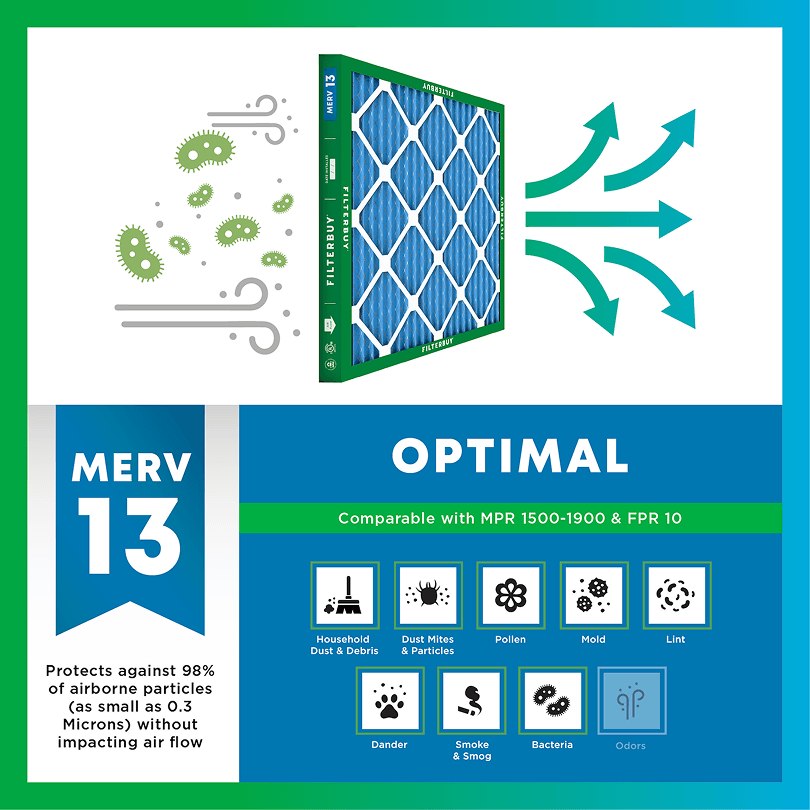
Fine enough to reach deep into the lungs. A MERV 13 is built to capture it.
It Doesn't Stay Local
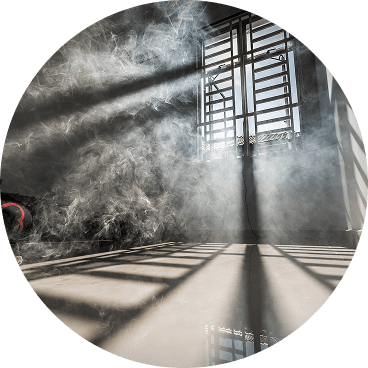
Smoke rides the wind far downwind — you can get smoky air with no fire nearby.
Simple steps to reduce indoor exposure.
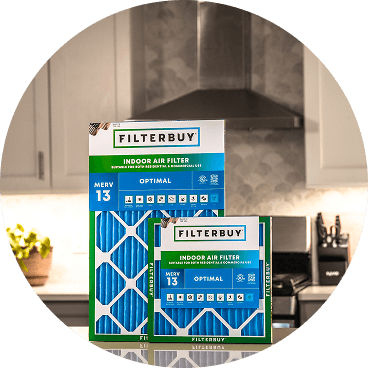
During smoke events, the EPA recommends upgrading to a MERV 13 filter — or the highest-rated filter your system can handle — to help reduce the fine particles smoke brings indoors. MERV 13 is the level most home HVAC systems can run while still capturing PM2.5, the fine particulate that makes up the bulk of wildfire smoke.
Over 70,000 wildfires burn in the U.S. every year.
Wildfire smoke can travel 1,000+ miles, affecting states that aren't even near the blaze.
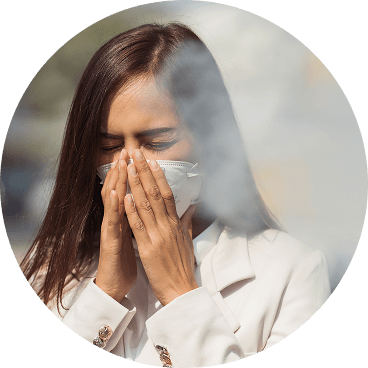
Exposure to wildfire smoke can worsen asthma, trigger heart issues, and lead to ER visits.
Indoor air can hold more fine particles during wildfire events unless it's properly filtered.
The EPA advises using MERV 13 filters or portable HEPA air cleaners during wildfire smoke events.
Use the live wildfire smoke tracker and upgrade your air filters today to protect your lungs and your home.
Shop Filters For Smoke Protection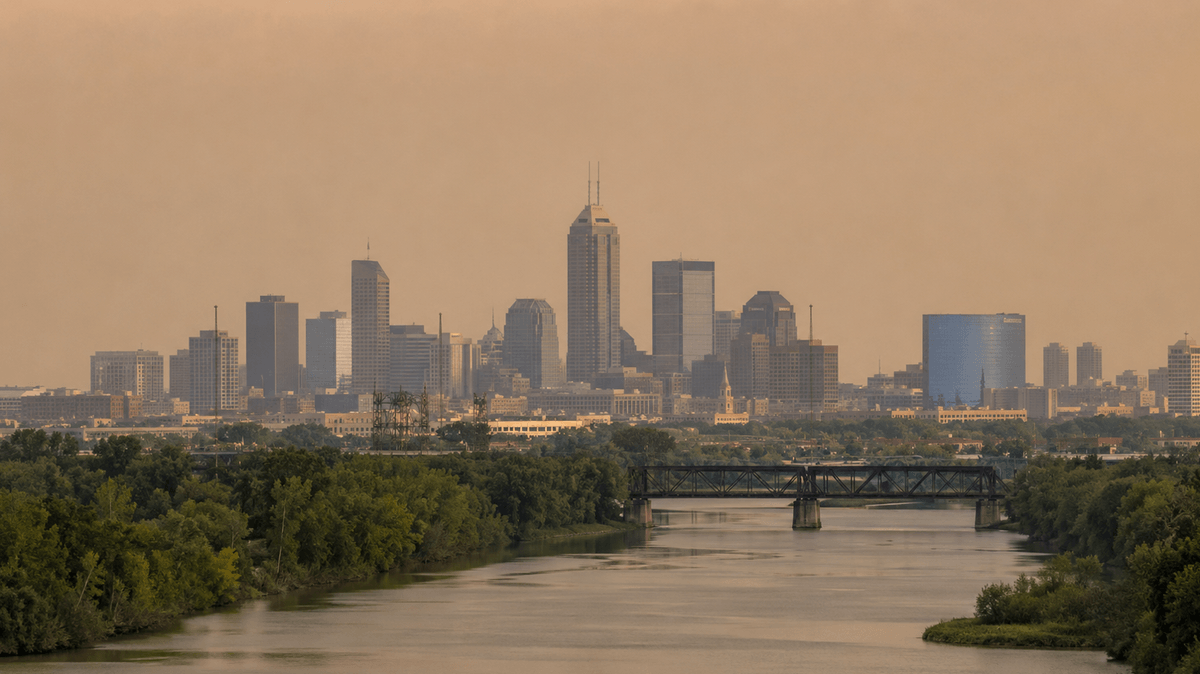
By: Michelle Wan, Brand Manager and Air Quality Writer
Reviewed by: David Clark, Licensed HVAC Technician
Published: July 22, 2026
Updated: July 22, 2026
Indiana rarely burns, yet this week its sky carries Canadian wildfire smoke stacked on a fresh ozone alert. Use the live map and filtration guidance below to check both threats at once.
Wildfire smoke drifting into Indiana from Canadian and western U.S. fires is currently affecting the state's air quality, alongside separate ground-level ozone concerns tied to summer heat. Use the live map below to check active fire locations and smoke plumes near you, check the current AQI for your county, and follow the protective steps in this guide if conditions reach Unhealthy for Sensitive Groups or worse. Filterbuy recommends closing windows and running your HVAC system with a high-efficiency filter whenever an Air Quality Action Day is in effect for your area.
Wildfire smoke from Canada and the western U.S. reaches Indiana on upper-level winds and can combine with local ground-level ozone.
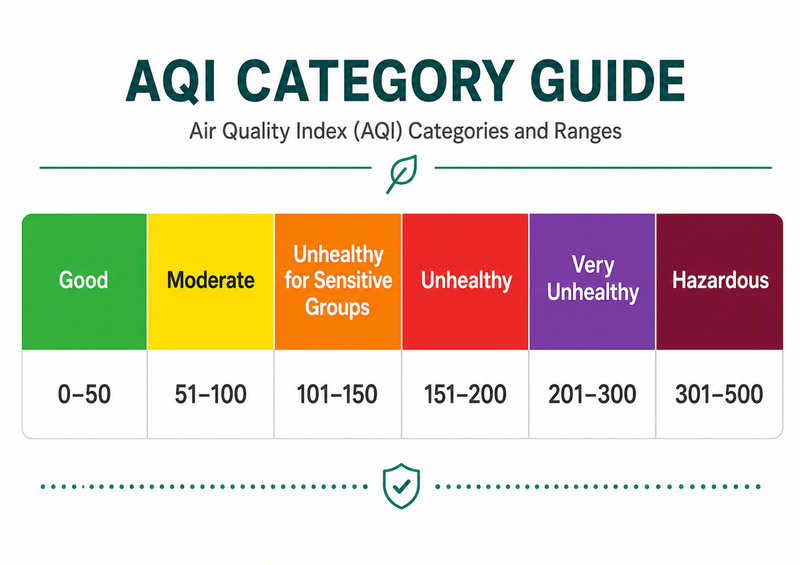
The AQI runs from 0 to 500 and tells you how safe outdoor air is on a given day.
Children, older adults, pregnant people, and anyone with asthma, COPD, or heart disease face the highest risk.
IDEM issues an Air Quality Action Day when PM2.5 or ozone is forecast to reach unhealthy levels.
Closing windows and running a high-efficiency HVAC filter cuts indoor smoke exposure.
Smoke drifting south from wildfires burning in Ontario, Canada is pushing hazy skies across Central Indiana this week, carried by upper-level winds that circle the Great Lakes. Indiana has few large wildfires of its own, but smoke does not respect borders, and plumes from Canada or the western United States can travel hundreds or thousands of miles east and south. A separate, more immediate concern is ground-level ozone, driven by high heat and sunshine, which prompted IDEM to issue Air Quality Action Days for parts of Central and Northwest Indiana. Both can occur the same day, so check the live map above to see which one is elevated in your county right now.
The AQI translates pollution measurements, including PM2.5 and ground-level ozone, into a single 0 to 500 scale with six color-coded categories, built on the same scale the EPA and AirNow use.
AQI categories and guidance reflect current EPA Air Quality Index standards.
Yes, and recently. Central Indiana's worst known brush with wildfire smoke came in June 2023, during Canada's most active wildfire season on record. Smoke traveled more than 1,000 miles into the state, and a National Weather Service meteorologist in Indianapolis reported a PM2.5 reading around 249, putting the city among the most polluted in the world for several days. Indianapolis declared a string of Knozone Action Days and by late June had logged the second-highest count of those days in over a decade. It has not stayed rare since.
The biggest health threat in wildfire smoke comes from PM2.5, particles small enough to penetrate deep into the lungs and, in some cases, the bloodstream. Short-term exposure is linked to eye, nose, and throat irritation, coughing, and aggravated asthma or COPD symptoms, and research on wildfire-specific particulate matter has connected it to increased respiratory and cardiovascular hospital visits (Aguilera et al., 2021). Symptoms can linger for days after a smoke event visibly clears, as explained in Filterbuy's guide to how long wildfire smoke stays in the air. Filters pulled during an active smoke week often come back visibly darker and heavier, a sign of how much particle load your HVAC system caught instead of your lungs.
Check the live map and your county's AQI before planning outdoor activity, and limit strenuous exercise on Orange, Red, Purple, or Maroon AQI days.
Wear a well-fitting, NIOSH-approved respirator, such as an N95, if you must be outside.
Move indoors if you notice coughing, chest tightness, or shortness of breath.
For a full room-by-room walkthrough, see Filterbuy's guide to keeping wildfire smoke out of your house.
Close windows and doors, and set your HVAC system to recirculate indoor air.
Run your HVAC system with a high-efficiency air filter, or use a portable air cleaner sized for the room.
Avoid frying, broiling, burning candles, or vacuuming during a smoke event.
Set up a clean room, ideally a bedroom, with the door closed and an air cleaner running if smoke is heavy.
For placement and sizing guidance, see Filterbuy's guide to running an air purifier during wildfire season.
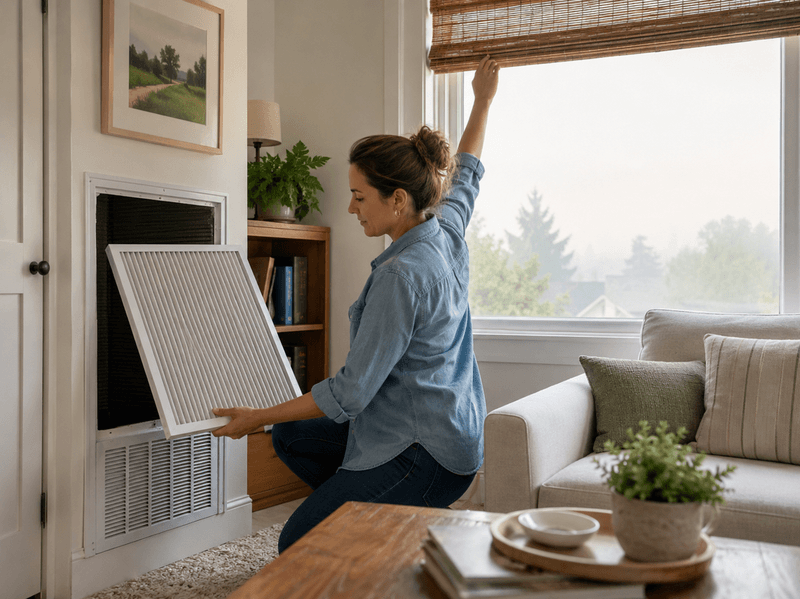
Smoke that starts in a Canadian forest doesn’t check the map before it reaches Indiana, and we’ve watched Hoosier customers get caught off guard by that more than once. The families who ride it out best are the ones who treat the haze as their cue to check the filter, not just the weather.
David Heacock, Founder and CEO, Filterbuy
These seven resources cover what comes next, including how researchers know wildfire smoke carries its own distinct health risk.
The CDC lays out step-by-step guidance for reducing smoke exposure indoors and outdoors and when a symptom warrants medical care.
Source: CDC: Safety Guidelines, Wildfires and Wildfire Smoke
This EPA hub explains how the Fire and Smoke Map is built and how to set up a clean room during a smoke event.
Source: EPA: Wildland Fires and Smoke
AirNow's Indiana page pulls live monitor readings broken out by county.
Source: AirNow: Indiana State Air Quality Page
IDEM explains which pollutant levels and weather patterns trigger a statewide or regional advisory, and what to do once one is issued.
Source: IDEM: Air Quality Action Day (AQAD) Advisories
The National Interagency Fire Center publishes daily counts of fires and acres burned each morning.
Source: National Interagency Fire Center: Current National Fire Statistics
This peer-reviewed study finds wildfire smoke carries a measurably higher risk of respiratory hospital visits than everyday particle pollution.
Source: PMC: Aguilera et al., 2021, Wildfire Smoke Exposure and Health Outcomes
This interagency program issues Smoke Outlooks wherever an Air Resource Advisor is deployed, projecting how a smoke event will develop.
Source: Interagency Wildland Fire Air Quality Response Program: Current Smoke Outlooks
1. 37 Million People, One Smoke Event. During a single 2025 Canadian wildfire smoke event, the U.S. Census Bureau estimated more than 37 million Americans faced unhealthy air, from the Upper Midwest into the Northeast.
Source: U.S. Census Bureau: 2025 Canada Wildfires and United States Air Quality
2. 44 Percent Of The Country Is Failing. The American Lung Association's latest report card found 44 percent of Americans, 152.3 million people, live in counties earning a failing grade for ozone or particle pollution, including Indiana's corridor.
Source: American Lung Association: State of the Air, Key Findings
3. Smoke Crosses The Border Fast. NOAA satellite tracking documented smoke from Manitoba wildfires reaching the Dakotas within days, the same pattern behind Indiana's smoke events.
Source: NOAA NESDIS: Wildfire Smoke and Air Quality
Indiana's air problems this week come from two directions at once. Canadian wildfire smoke drifts in from hundreds of miles away, and ground-level ozone builds locally from summer heat. Neither shows up the same way twice, which is why a live map matters more than a memorized rule of thumb. Our take at Filterbuy is that most households treat wildfire smoke as someone else's problem until their own sky turns orange. Indiana rarely burns, but it breathes what other states and countries burn. Build the habit of checking the map before the weather app, and keep one high-efficiency filter on hand year-round rather than waiting for an Air Quality Action Day.
Indiana rarely has large wildfires of its own. Most smoke comes from fires burning in Canada or the western U.S., carried in on upper-level wind. Check the live map above for fires reported inside the state.
An AQI above 100 is Unhealthy for Sensitive Groups, and above 150 is Unhealthy for everyone. Limit outdoor exertion at those levels per the table above.
Yes. Wind patterns can carry smoke hundreds or thousands of miles. Whether it reaches ground level depends on how high the smoke sits and how local weather moves it.
It is a public notice issued by IDEM when PM2.5 or ozone levels are forecast to reach unhealthy levels, with sensitive groups encouraged to limit outdoor exertion.
Running your HVAC system on recirculate with a high-efficiency filter, or a properly sized portable air cleaner, can meaningfully reduce outdoor smoke reaching your indoor air. See Filterbuy's best MERV filter for wildfire smoke guide for more detail.
Bookmark this live map and make checking Indiana's air quality part of your weekly routine. When the AQI turns orange, protect your family with a MERV 13 filter already installed before the smoke arrives.
AQI: A 0 to 500 scale the EPA uses to communicate how polluted outdoor air is.
PM2.5: Fine particulate matter 2.5 micrometers or smaller, small enough to penetrate deep into the lungs and the primary pollutant of concern in wildfire smoke.
MERV: Minimum Efficiency Reporting Value, the 1 to 16 scale rating how well an HVAC filter captures airborne particles. See Filterbuy's guide to choosing a MERV rating.
Air Quality Action Day: A public advisory issued by an agency such as IDEM when air pollution is forecast to reach unhealthy levels.
Sensitive Groups: People at higher risk from air pollution, including children, older adults, and people with asthma, COPD, heart disease, or pregnancy.
Clean Room: A bedroom or similar room sealed off from outside air and equipped with air filtration during a heavy smoke event.
Subscribe to wildfire smoke alerts for Indiana to get a heads-up before the next event reaches your area.