The moment a wildfire starts near you, you'll get an instant alert and simple tips to reduce your smoke exposure.
30xSmaller than a human hair
Fine enough to reach deep into the lungs. A MERV 13 is built to capture it.
It Doesn't Stay Local
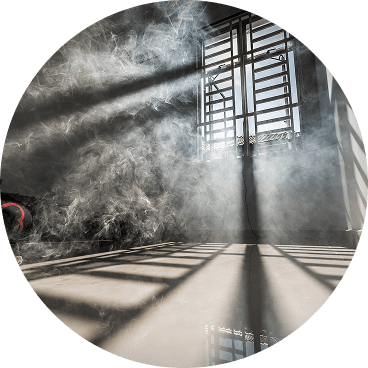
Smoke rides the wind far downwind — you can get smoky air with no fire nearby.
Simple steps to reduce indoor exposure.
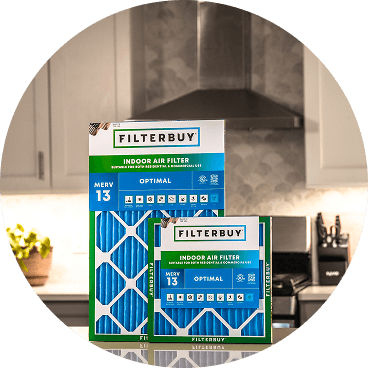
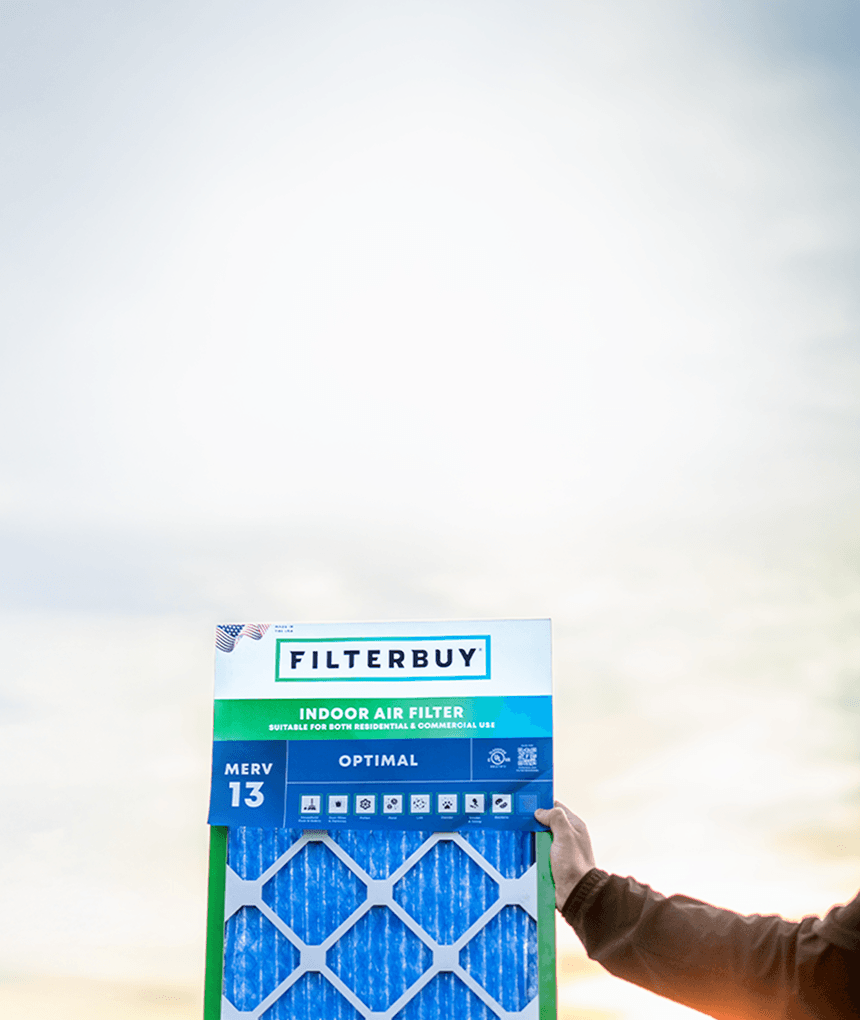
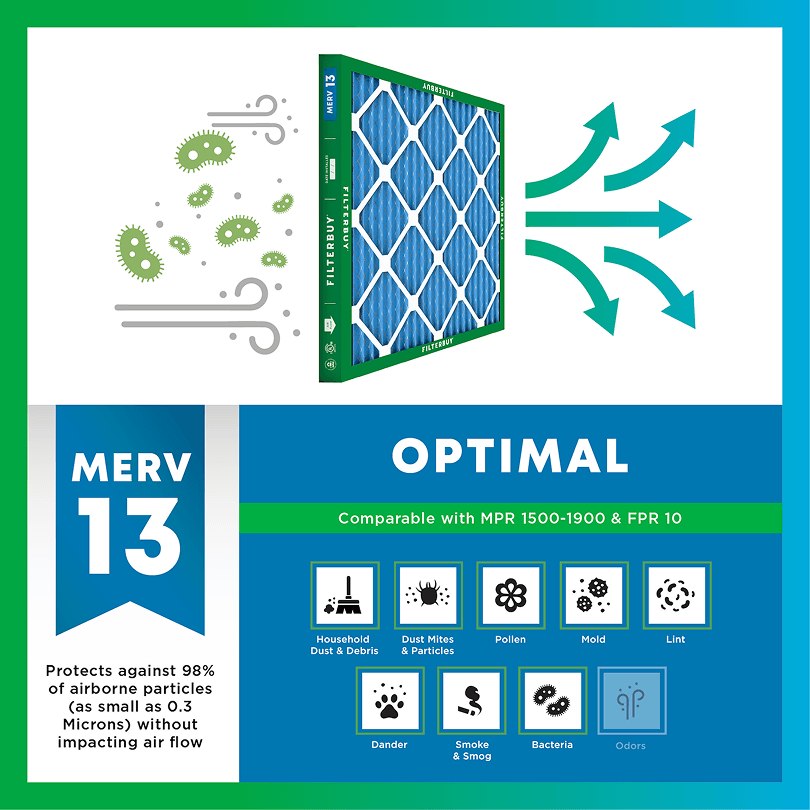
During smoke events, the EPA recommends upgrading to a MERV 13 filter — or the highest-rated filter your system can handle — to help reduce the fine particles smoke brings indoors. MERV 13 is the level most home HVAC systems can run while still capturing PM2.5, the fine particulate that makes up the bulk of wildfire smoke.
Over 70,000 wildfires burn in the U.S. every year.
Wildfire smoke can travel 1,000+ miles, affecting states that aren't even near the blaze.
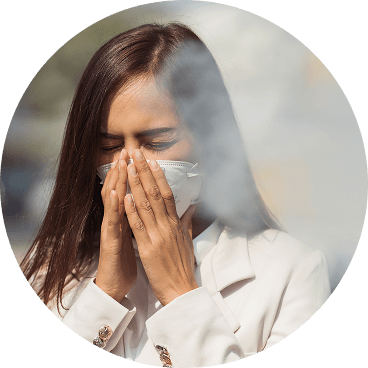
Exposure to wildfire smoke can worsen asthma, trigger heart issues, and lead to ER visits.
Indoor air can hold more fine particles during wildfire events unless it's properly filtered.
The EPA advises using MERV 13 filters or portable HEPA air cleaners during wildfire smoke events.
Use the live wildfire smoke tracker and upgrade your air filters today to protect your lungs and your home.
Shop Filters For Smoke Protection
Author: Michelle Wan, Brand Manager and Air Quality Writer
Reviewer: David Clark, Licensed HVAC Technician
Publish Date: July 22, 2026
Updated Date: July 22, 2026
D.C. has no wildfires of its own, so every smoke day arrives from hundreds of miles away. Filterbuy, a U.S. air filter manufacturer since 2013, watches D.C. filter demand spike the same week smoke rolls in. The map above tracks that smoke in real time from the same federal source local news relies on.
The live map above pulls from the AirNow Fire and Smoke Map, a joint EPA and U.S. Forest Service tool, showing every active wildfire, smoke plume, and fine particle reading near Washington, D.C. right now. D.C. has no wildland fires of its own, so smoke here travels in from Canada, the mid-Atlantic, or the Southeast. When the reading climbs into orange or worse, a MERV 13 filter is the fastest way to protect indoor air.
D.C.'s wildfire smoke risk comes almost entirely from transported smoke, not local wildland fires.
The June 2023 Canadian wildfires pushed D.C.'s AQI into Maroon, the most hazardous EPA category.
D.C. earned an F for ozone and a D for short-term particle pollution in the ALA's 2026 State of the Air report, so bad air days are seasonal, not rare.
A MERV 13 filter captures roughly 85 percent of the fine particles behind smoke-day AQI spikes, versus under 20 percent for a standard MERV 8 panel.
Indoor PM2.5 during a wildfire event typically reaches 49 to 76 percent of outdoor levels, per Lawrence Berkeley National Laboratory.
Wildfire-specific PM2.5 harms respiratory health more than an equal amount from other sources, per peer-reviewed UC San Diego research.
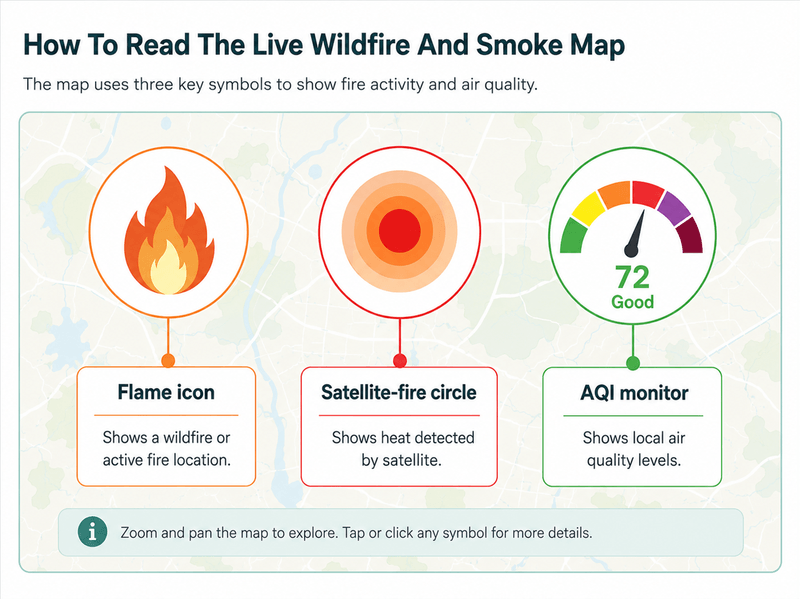
The map combines satellite-detected fire locations, ground-based particle monitors, and modeled smoke plumes, updated continuously. Colored circles are monitor and sensor readings colored by the U.S. Air Quality Index. A flame icon marks a reported fire. A glowing circle marks a satellite-detected hot spot, which can sit miles from where its smoke actually settles. Click any icon for the current reading and recommended actions, or use the search box to jump to a D.C. neighborhood. Yellow, orange, red, or worse near Washington means smoke or elevated particle pollution is present right now. Most incidents link out to InciWeb, the national interagency fire tracker, for size, containment, and location. Set a location-based air quality alert on your phone once, rather than relying on memory during smoke season.
Washington has no wildland fuel base, so its wildfire smoke is entirely imported. Plumes from large fires in Canada, the mid-Atlantic, and the Southeast can travel hundreds or thousands of miles at altitude, sometimes with only a day's warning. Geography plays a role too. D.C. sits in a shallow river basin between the Blue Ridge and the coastal plain, terrain that traps pollution instead of flushing it out. NOAA's HRRR Smoke model predicts inbound smoke concentration and injection height up to 36 hours ahead.
Filterbuy's breakdown of how far wildfire smoke can travel shows plumes routinely crossing state lines before settling over a city like D.C.
June 2023 remains the clearest example. Smoke from Canadian wildfires pushed Washington's AQI above 300, the Maroon category and the most hazardous EPA rating, prompting the District to issue a Code Red and Code Maroon alert. D.C. is also currently in a national wildfire season with elevated activity.
The National Interagency Fire Center's preparedness level tracker shows the country at a high nationwide readiness level as of mid 2026, meaning source fires large enough to reach this far east are more likely, not less, in the months ahead.
Timing and categories are approximate and drawn from contemporaneous local reporting. Check the live map above for current conditions.
The citywide AQI is an average, and averages hide the corridors that run worse. DOEE's Aclima mobile monitoring has recorded PM2.5 in Buzzard Point at roughly double the national standard, with the Anacostia Freeway corridor and parts of Mayfair also running higher. Treat the citywide number as a floor, not a ceiling, near a freeway, industrial corridor, or densely built area with limited tree canopy.
Exposure also depends on how you spend your day. Outdoor federal and contract workers, grounds crews, postal carriers, construction crews, work full shifts outside regardless of the AQI. Metro and bus commuters get no shelter above ground, sometimes 20 to 40 minutes at the worst hours. Renters without control over central HVAC, common in D.C. rowhouse conversions, cannot upgrade to MERV 13, so a portable HEPA purifier in the main room is the practical substitute.
Orange, unhealthy for sensitive groups, means kids, pregnant residents, older adults, and anyone with asthma or heart disease should shorten outdoor time and skip strenuous exercise. Red or worse means everyone should avoid strenuous outdoor activity. If you must be outside during a Red or Maroon reading, CDC and NIOSH guidance recommends a fitted N95 or P100 respirator, since a bandana or surgical mask will not filter smoke particles.
Filterbuy's guide to choosing an N95 for wildfire smoke has more.
Close windows and outdoor air intakes during a smoke event, and run your HVAC system on recirculate if it has that setting. Older D.C. rowhouses leak more at door and window seals than newer construction, so the filter does more of the real work than most people expect.
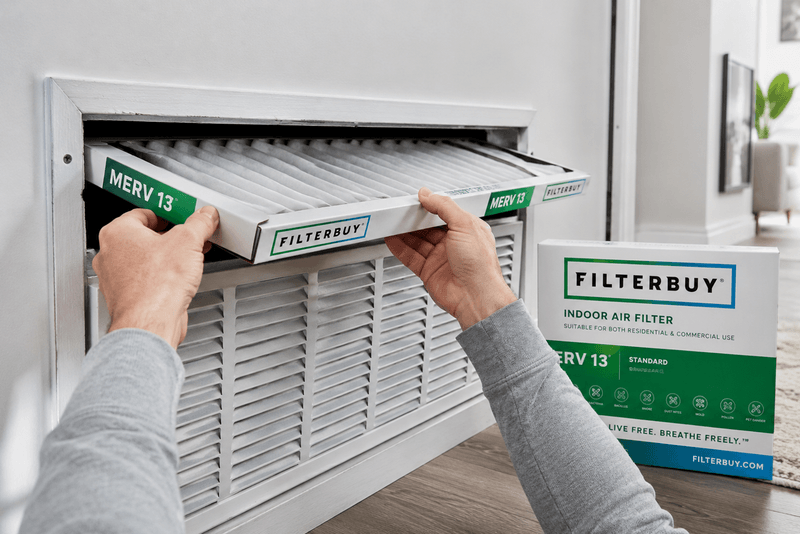
A high efficiency filter is the single highest impact change you can make indoors on a smoke day. MERV 13 media captures the 1.0 to 3.0 micron range where most wildfire smoke and PM2.5 concentrate, while a standard MERV 8 panel misses most of it.
D.C. households can browse Filterbuy's MERV 13 air filters, available in over 600 sizes and manufactured in the United States.
See Filterbuy's live D.C. AQI map for monitor-level detail, and Filterbuy's guide to running an air purifier during wildfire season for pairing a portable purifier with that filter.
Wildfire smoke risk in D.C. is not spread evenly across the year.
Seasonal pattern synthesized from EPA, NOAA HRRR-Smoke, and American Lung Association reporting cited on the full page. Individual years vary.
After manufacturing filters for over a decade and serving more than two million households, we've seen how fast a smoke event changes what a family is breathing indoors. A MERV 13 filter is the floor we recommend for D.C. homes during wildfire season, full stop.
David Heacock, Founder and CEO, Filterbuy
These seven sources are where Filterbuy looks first for D.C. air quality questions, each straight from the federal or regional authority that owns the data.
The AirNow Fire and Smoke Map, embedded above, combines EPA and U.S. Forest Service monitors, satellite fire detection, and plume tracking in one continuously updated view.
Source: AirNow Fire and Smoke Map
The EPA's Particulate Matter Basics guide explains fine particle pollution in plain language.
Source: EPA's Particulate Matter Basics Guide
The DOEE Ambient Air Quality Monitoring page describes the six stations, from McMillan Reservoir to King Greenleaf, behind D.C.'s official numbers.
Source: DOEE Ambient Air Quality Monitoring
NOAA's HRRR Smoke model predicts smoke concentration and plume height up to 36 hours ahead.
Source: NOAA's HRRR Smoke Forecast Model
InciWeb, the federal interagency incident tracker, gives size, containment, and location for the fire behind a plume.
Source: InciWeb National Incident Information System
CDC and NIOSH's wildfire smoke guidance covers proper N95 fit and when to head back inside for good.
Source: CDC/NIOSH Wildfire Smoke Guidance
MWCOG's air quality forecast layers in Maryland and Northern Virginia conditions to separate regional haze from a local reading.
Source: MWCOG Air Quality Forecast
D.C. earned an F for ozone and a D for short-term particle pollution in the ALA's 2026 State of the Air report, a grade the District's ozone rating has failed nearly every year since 2000.
Source: American Lung Association, State of the Air 2026: District of Columbia
Wildfire-specific PM2.5 is up to 10 times more harmful to respiratory health than an equal amount from other sources, per peer-reviewed UC San Diego research, which is why a smoke day and a high pollen day call for different filtration.
Source: Aguilera et al., Nature Communications (2021)
Indoor PM2.5 during a wildfire event typically reaches 49 to 76 percent of outdoor levels, per Lawrence Berkeley National Laboratory, likely toward the higher end in D.C.'s older, leakier buildings.
Source: Lawrence Berkeley National Laboratory, Wildfires and Indoor Air Quality
D.C.'s wildfire smoke problem is really an important problem, and that distinction changes how a household should prepare. Most households check the map too late, with filter orders spiking the same week a smoke event makes the news. A map only helps if a MERV 13 filter is already installed before it turns orange.
Check Filterbuy's national live wildfire and smoke map today, and do not wait for the sky to confirm what it is already showing you.
No. D.C. has essentially no wildland fuel base. Every wildfire smoke event here comes from fires burning elsewhere, most often in Canada, the mid-Atlantic, or the Southeast.
It varies year to year, from mild haze days to multi-day Code Red or Maroon events like 2023. Check the live map above rather than assuming based on last year.
Sensitive groups should limit outdoor time above 100, Orange. Everyone should limit strenuous activity above 150, Red, and stay inside above 200, Purple or Maroon.
A basic fiberglass filter captures very little fine particulate matter. A MERV 13 filter captures roughly 85 percent of smoke-range particles, the recommended smoke season baseline.
The AirNow Fire and Smoke Map, a joint EPA and U.S. Forest Service effort. MWCOG's air quality forecast adds regional context for the D.C. area.
Yes. Dogs and cats breathe the same fine particles humans do. Keep walks short on Orange days, skip them on Red or worse, and keep pets in the same filtered indoor air.
AQI (Air Quality Index): A 0 to 500 EPA scale translating pollutant concentrations into a single, color-coded number.
PM2.5: Fine particulate matter 2.5 micrometers or smaller, the main component of wildfire smoke.
MERV Rating: A 1 to 20 scale rating how well an HVAC filter captures airborne particles. MERV 13 is the recommended floor for wildfire smoke protection.
Code Red / Code Maroon: D.C. alert levels for AQI forecast unhealthy, Red, above 150, or hazardous, Maroon, above 300.
Subscribe to wildfire smoke alerts for the District of Columbia to get a heads-up before the next event reaches your area.