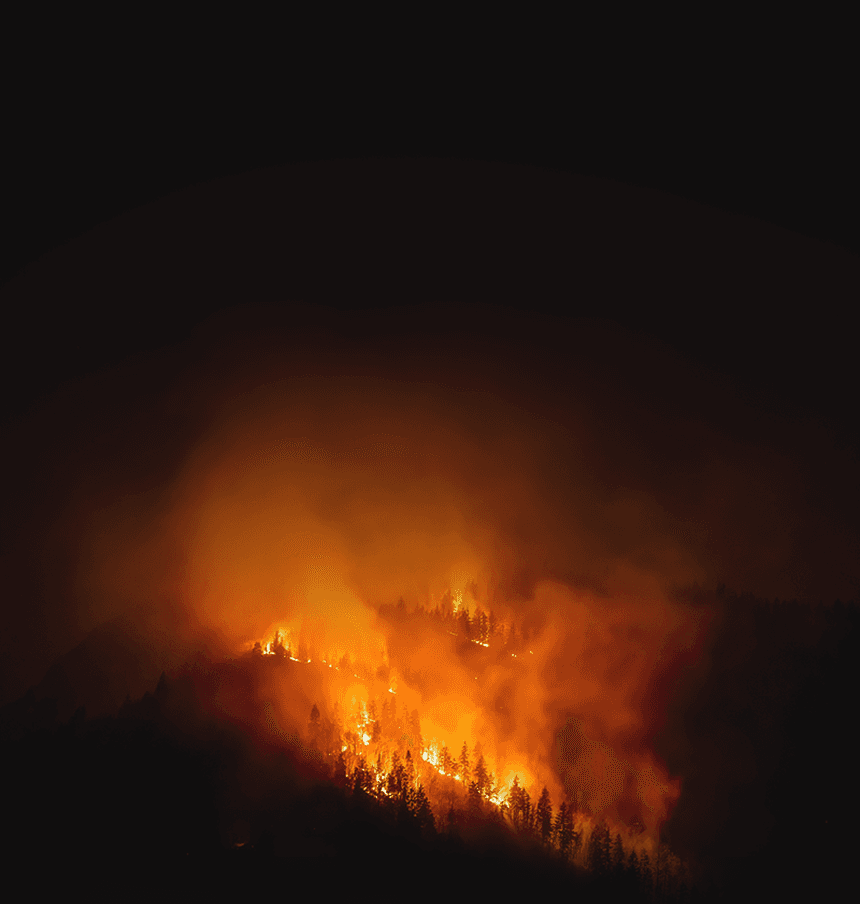
The moment a wildfire starts near you, you'll get an instant alert and simple tips to reduce your smoke exposure.
30xSmaller than a human hair
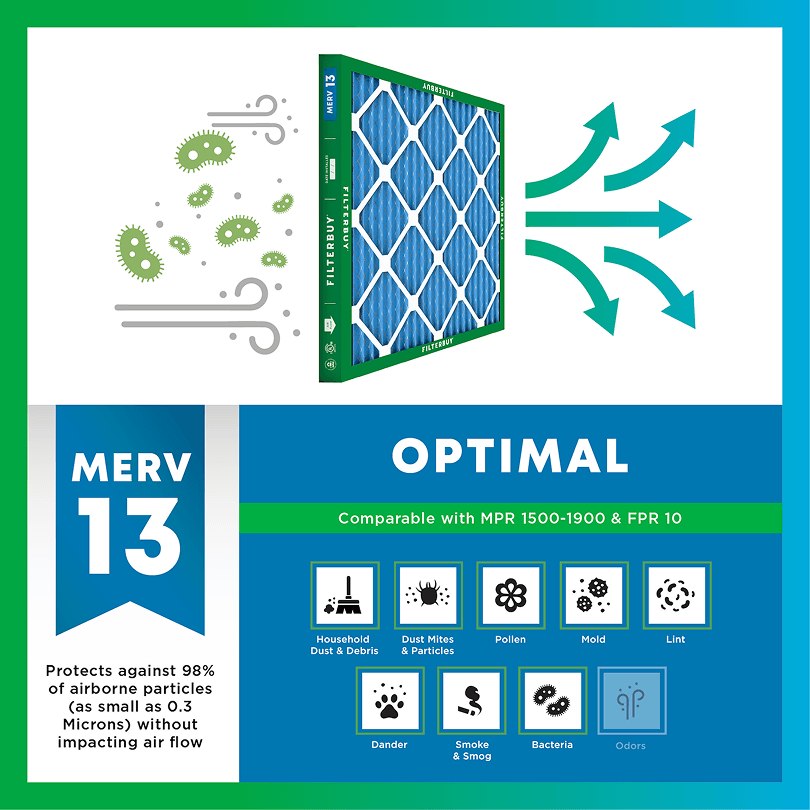
Fine enough to reach deep into the lungs. A MERV 13 is built to capture it.
It Doesn't Stay Local
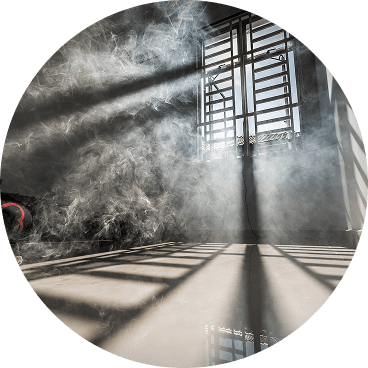
Smoke rides the wind far downwind — you can get smoky air with no fire nearby.
Simple steps to reduce indoor exposure.
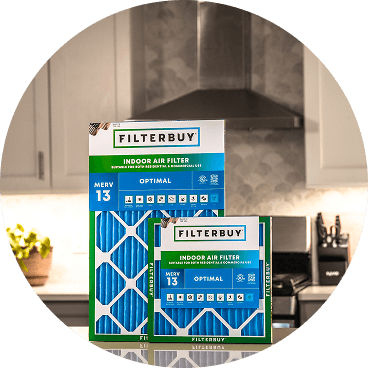
During smoke events, the EPA recommends upgrading to a MERV 13 filter — or the highest-rated filter your system can handle — to help reduce the fine particles smoke brings indoors. MERV 13 is the level most home HVAC systems can run while still capturing PM2.5, the fine particulate that makes up the bulk of wildfire smoke.

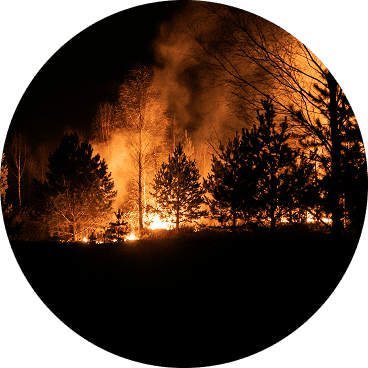
Over 70,000 wildfires burn in the U.S. every year.
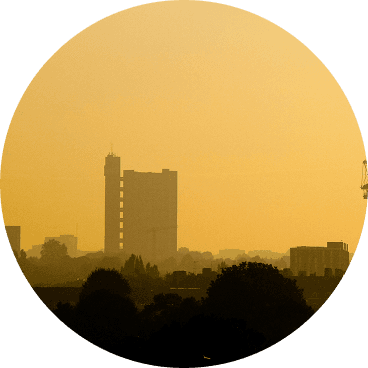
Wildfire smoke can travel 1,000+ miles, affecting states that aren't even near the blaze.
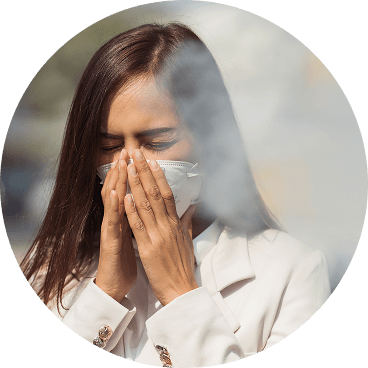
Exposure to wildfire smoke can worsen asthma, trigger heart issues, and lead to ER visits.
Indoor air can hold more fine particles during wildfire events unless it's properly filtered.
The EPA advises using MERV 13 filters or portable HEPA air cleaners during wildfire smoke events.
Use the live wildfire smoke tracker and upgrade your air filters today to protect your lungs and your home.
Shop Filters For Smoke Protection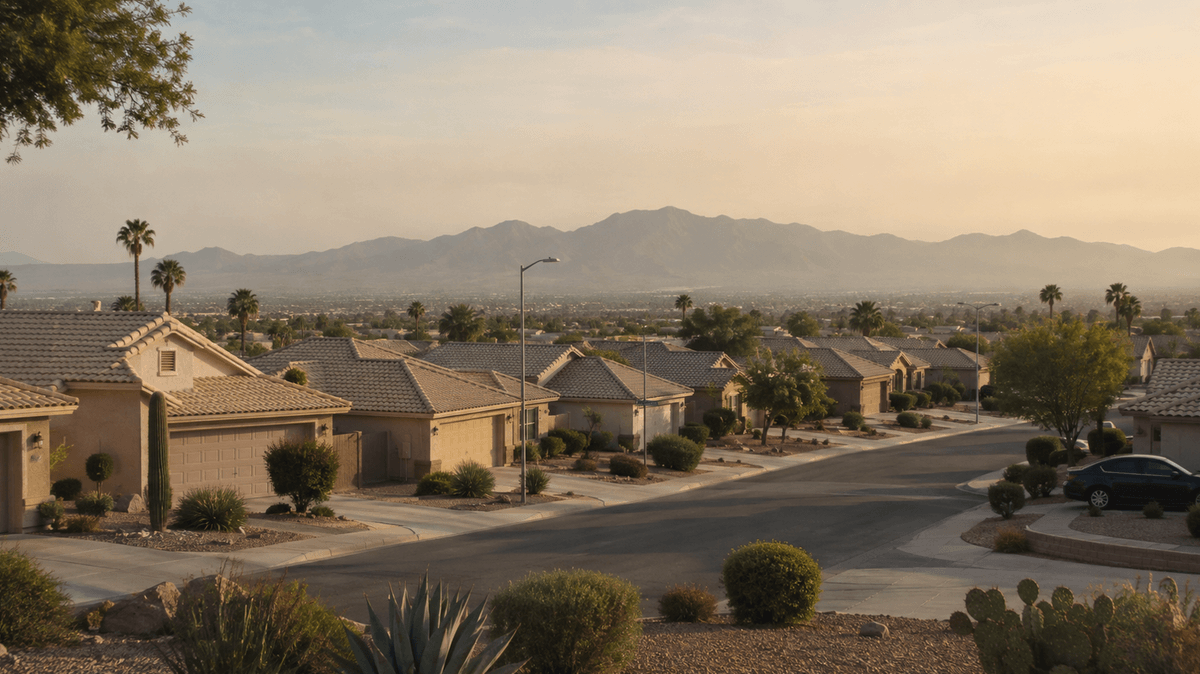
By Michelle Wan, Brand Manager & Air Quality Writer
Reviewed By: David Clark, Licensed HVAC Technician
Published: August 11, 2026 | Updated: August 11, 2026
Most Glendale air quality alerts have nothing to do with wildfire. I pull AQI readings for Filterbuy, the U.S. air filter manufacturer I write for, every morning, and Glendale's numbers mislead more often than most. The city sits in the flat Sonoran Desert with no forest inside its limits and the nearest fuels 40 to 70 miles out, so a hazy sky here usually means blowing dust or ground-level ozone. Only two of the three respond to a filter. The map below shows which you are facing now.
Filterbuy's live Glendale map shows active wildfires, smoke plumes, and monitor-level air quality, refreshed from AirNow, NASA FIRMS, and NOAA modeling. Glendale has no forest within city limits, so smoke here is transported from fires 40 to 70 miles out in the Tonto or Prescott National Forests. On most bad-air days, the cause is dust or ozone, and each demands a different response indoors.
Glendale has no forest within its city limits. The nearest fuels are Prescott National Forest, roughly 70 miles northwest, and Tonto National Forest, roughly 40 miles northeast.
Most Glendale air quality alerts are not smoke. Arizona DEQ issued a PM10 advisory for Maricopa County on August 4, 2026, and an ozone advisory July 1–3, 2026.
The EPA recommends MERV 13 or higher during smoky periods, replaced far sooner than the label suggests, because smoke loads a filter in days.
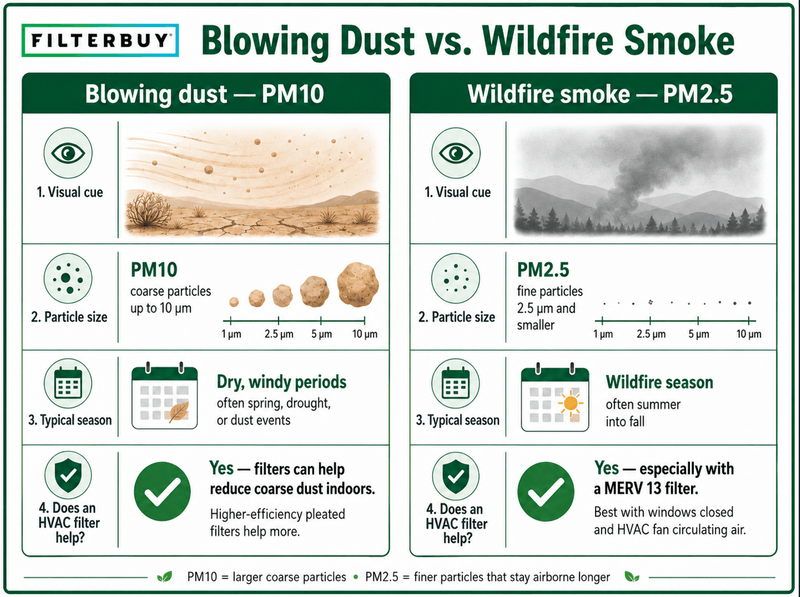
Dust and smoke load a filter differently. Dust packs the outer pleat face while smoke buries itself in the media depth, so a filter's appearance misleads in opposite directions by season.
The map combines satellite fire detections from NASA FIRMS, plume position from NOAA's HRRR-Smoke, and ground readings from AirNow, which aggregates Maricopa County monitors. Read it in that order: fire, then plume, then monitor. A hotspot 90 miles out means nothing unless the plume layer carries it over the Valley and a Glendale monitor confirms elevated PM2.5.
Brown or tan haze over Glendale is usually windblown dust. Gray or bluish haze carrying a campfire smell is wildfire smoke. A flat, milky sky on a hot, still afternoon is ozone. Each behaves differently once inside your home, so the distinction changes what you should do.
Ozone is a gas and passes through particle filters. On ozone advisory days, limit outdoor air rather than upgrading the filter.
Every summer Valley customers ask the same thing: the sky looks terrible, what filter should I buy right now? Half the time the honest answer is that today is a dust day and the filter already in their system is handling it.
Michelle Wan, Brand Manager and Air Quality Writer, Filterbuy
Smoke reaching Glendale is imported, not local. Three sources account for most of it: Tonto National Forest, 40 miles northeast, where the 2020 Bush Fire burned 193,455 acres; Prescott National Forest and the Bradshaws, 70 miles northwest, which also runs prescribed pile burns; and brush fires inside Maricopa County, like the 1,191-acre Hazen Fire near Buckeye in 2026. Arizona now carries ignition risk year-round. Track conditions statewide on the Arizona map.
Wind direction tells you whether smoke on the map is headed here. Glendale's three particle sources sit in three directions, so the wind that clears one brings another.
ADEQ Phoenix forecasters note that monsoon outflows arriving from the south or southeast are considerably more conducive to dense blowing dust than those from the north.
When the map confirms smoke rather than dust or ozone, work through these steps in order. Each follows current EPA guidance.
Close the envelope. Shut windows and doors; set the HVAC fresh-air intake to recirculate.
Run the fan continuously. Thermostat fan to "On," not "Auto."
Upgrade the filter. MERV 13 or higher is the EPA recommendation.
Build one clean room. Add a portable HEPA cleaner where you spend the most time, avoiding purifiers that generate ozone. We compare MERV 13 against HEPA units.
Stop adding your own smoke. No candles, gas stove, frying, or vacuuming.
Check the filter far more often. Smoke loads a high-MERV filter in days. Inspect every two weeks; replace when the media looks dark.
A swamp cooler can undo every other step on this list. A central air conditioner recirculates indoor air through your filter. An evaporative cooler does the opposite: it pulls outdoor air through wet pads and replaces your indoor air with it, unfiltered. EPA guidance is direct, so avoid running one when outdoor pollution is high unless it carries a high-efficiency filter.
This matters more here than most places, because evaporative cooling is common in Glendale's older homes, rentals, and mobile homes, and smoke season overlaps the months you most need cooling.
If it is your only cooling, you are choosing between heat risk and smoke risk, and heat is the more immediate danger in an Arizona summer. Do not shut it off in August. Run it, filter or cover the intake where you safely can, and set up one filtered clean room as a refuge.
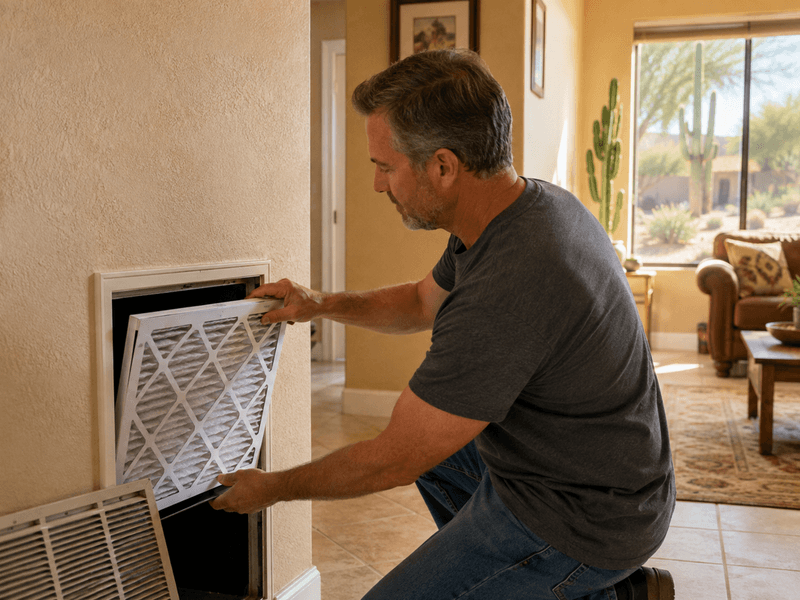
Glendale homes face a dual load: fine smoke during fire events, coarse dust year-round. Choose based on your system's capability, not the day's headline.
MERV 13 or higher is the EPA recommendation during smoky periods. Verify your system can handle the airflow resistance before upgrading.
Because Filterbuy builds these filters in its own U.S. plants rather than reselling someone else's, we see how differently the two loads behave. Dust packs the outer pleat face, so a filter looks filthy while still moving air. Smoke buries itself in the media depth, so it can look lightly grayed and already be restricting airflow.
Wildfire content written for Arizona homeowners assumes the threat looks like Northern California: orange skies, a fire visible from the driveway. Having watched Valley readings every morning through several fire seasons, I think that framing does real damage here, because it trains people to relax on the days that matter.
Glendale's particulate load is chronic rather than dramatic. Monsoon dust rolls through on a schedule, ozone builds every hot afternoon April through September, and smoke arrives from fires most residents never hear about. Upgrade only when the news mentions a fire and you miss most of the year's exposure.
I will also say what a Filterbuy filter will not do, because we sell them. It will not remove ozone, a gas. It will not fix a leaky building envelope. It will not substitute for evacuation guidance from Maricopa County.
The mistake I see most in Phoenix-area homes is jumping to the highest MERV rating on the shelf without checking whether the system can move air through it. If your blower is an older PSC motor, measure static pressure first. A filter your system can't breathe through protects nobody.
David Clark, CEO of Filterbuy HVAC Solutions and Licensed HVAC Technician
1. Fire and Smoke Map, from the EPA and U.S. Forest Service. Monitors, sensors, satellite detections, and plume overlays in one view. Check smoke levels now.
2. Arizona Department of Environmental Quality, Phoenix Forecast. A daily written forecast for ozone, PM10, and PM2.5, including expected dust. Read tomorrow's Valley forecast and subscribe to alerts there.
3. Maricopa County Emergency Management, Evacuation Zones. No air quality map is an evacuation tool. This one is. Confirm your evacuation zone before a fire event, not during one.
4. Arizona Interagency Wildfire Prevention, Situation Map. Incidents and fire restrictions on state, federal, and tribal lands. Check active Arizona incidents to trace a plume to its source.
5. Centers for Disease Control and Prevention, Wildfire Smoke Safety. Health guidance, including symptoms warranting medical attention. Review the smoke safety steps.
Upgrading your HVAC filter can cut indoor PM2.5 by roughly 50%. A high-efficiency filter with the fan running continuously may halve indoor PM2.5 during a smoke event, per EPA guidance on reducing smoke exposure indoors.
Phoenix-Mesa ranks 4th worst in the nation for unhealthy ozone days. The American Lung Association's 2026 State of the Air report also placed the metro 17th worst for short-term particle pollution. See the metro report card.
Portable HEPA units cut median indoor PM2.5 by 58% to 65% in a controlled trial. This published filtration study of 40 residences measured urban particulate, not wildfire smoke.
Check the fire layer on the map above. Fires inside city limits are rare, since the terrain is developed desert with little continuous fuel. Smoke you smell here usually comes from a fire dozens of miles off in the Tonto or Prescott National Forests.
Usually blowing dust, especially when monsoon outflows loft PM10 across the Valley. Ozone can also produce a flat, milky haze on hot afternoons. Use the table above to tell them apart.
Yes, if it is central air or a heat pump. Both recirculate indoor air through your filter rather than drawing outside air in. Evaporative coolers and some portable units pull outdoor air inside, working against you during smoke.
Close up when the AQI passes 100, the Unhealthy for Sensitive Groups threshold. Above 300 it enters the hazardous AQI range. If anyone at home has asthma, heart or lung disease, or is a young child or older adult, act in the Moderate range instead.
Glendale deals you dust, ozone, and smoke across most of the calendar, so the filter in your return vent works year-round. Find your exact size from over 600 options, shipped free and factory-direct, with auto-delivery so a fresh one arrives on time.
Michelle Wan is Brand Manager and Air Quality Writer at Filterbuy, covering AQI trends and wildfire smoke. She holds a B.A. from the University of California, Santa Cruz, and works with Filterbuy's manufacturing team across its four U.S. plants.
David Clark, CEO of Filterbuy HVAC Solutions and a Licensed HVAC Technician, reviewed this page for technical accuracy.
AQI is the EPA's 0–500 daily air pollution scale. Above 100 is Unhealthy for Sensitive Groups.
PM2.5 is fine particulate under 2.5 microns, the main health concern in wildfire smoke.
PM10 is coarse particulate under 10 microns, the dust behind most Phoenix-area advisories.
Filterbuy is a U.S. air filter manufacturer, founded in 2013, making pleated HVAC filters in MERV 8, 11, and 13 across 600+ sizes.