When air quality in your area reaches unhealthy levels, we'll send you a quick alert, along with expert tips on how to reduce your exposure.
The Air Quality Index (AQI) measures how polluted the air is and how it may affect your health.
0–50 (Good): Air quality is satisfactory.
51–100 (Moderate): Acceptable, but some pollutants may pose minor concerns.
101–150 (Unhealthy for Sensitive Groups)
151–200 (Unhealthy)
201–300 (Very Unhealthy)
301+ (Hazardous)
Still okay for most, but if you have asthma or allergies, take it easy and avoid long outdoor workouts.
Shop MERV 11 filters→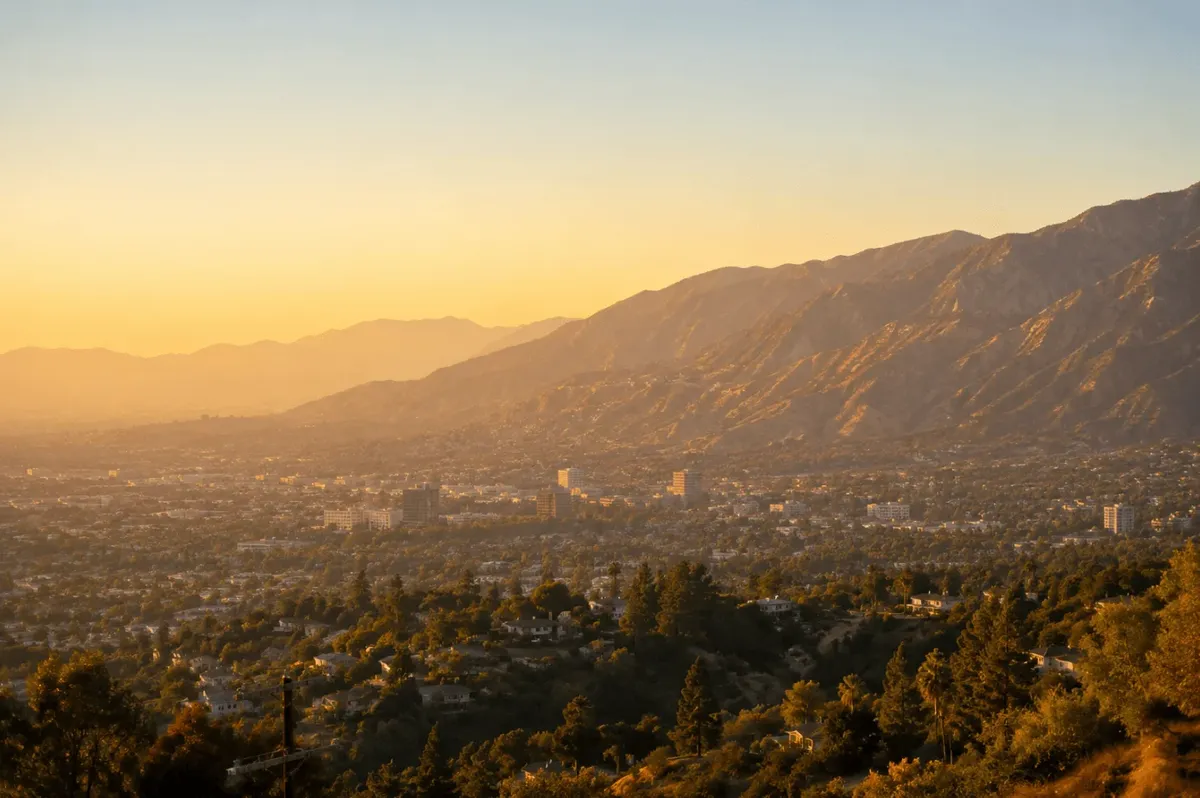
Author: Michelle Wan | Reviewer: David Clark, Licensed HVAC Technician | Publish Date: July 21, 2026 | Updated Date: July 21, 2026
Glendale sits where the San Fernando Valley meets the Verdugo Mountains, a location that traps vehicle emissions on hot, still afternoons and pulls in wildfire smoke during Santa Ana wind events. That live air quality reading for Glendale answers whether today is safe for outdoor time. The rest of this page covers what to do indoors once you have that answer, since most households spend the bulk of their day inside breathing the filtered version of that outdoor number. Filterbuy ships filters into the Los Angeles Basin every fire season, so what follows is what we actually tell Glendale customers, not a script copied from a national template.
View Glendale, CA Current Air Quality Map
Glendale's live AQI reading at the top of this page updates hourly from EPA AirNow and South Coast AQMD monitors covering the Los Angeles Basin. Ground-level ozone drives most high readings from spring through fall, while PM2.5 from traffic and wildfire smoke takes over in winter and during Santa Ana wind events. Once the outdoor number crosses into the Orange band, matching your HVAC filter to a higher MERV rating and running the fan continuously is the fastest way to protect the air your household actually breathes.
Glendale sits inside the South Coast Air Basin, which the American Lung Association ranks as the worst region in the nation for ozone pollution.
The Verdugo Mountains and San Fernando Valley trap vehicle emissions on hot, low-wind afternoons, which is why ozone tends to peak between March and October.
Smoke from the January 2025 Eaton Fire pushed Glendale-area air sensors into the Hazardous band, the most severe of the six AQI colors.
Indoor pollutant levels commonly run two to five times higher than outdoor readings, since most people spend roughly ninety percent of their time indoors.
MERV 13 filtration paired with continuous fan operation is the baseline the CDC and EPA point to once smoke or PM2.5 pushes the AQI into Orange or higher.
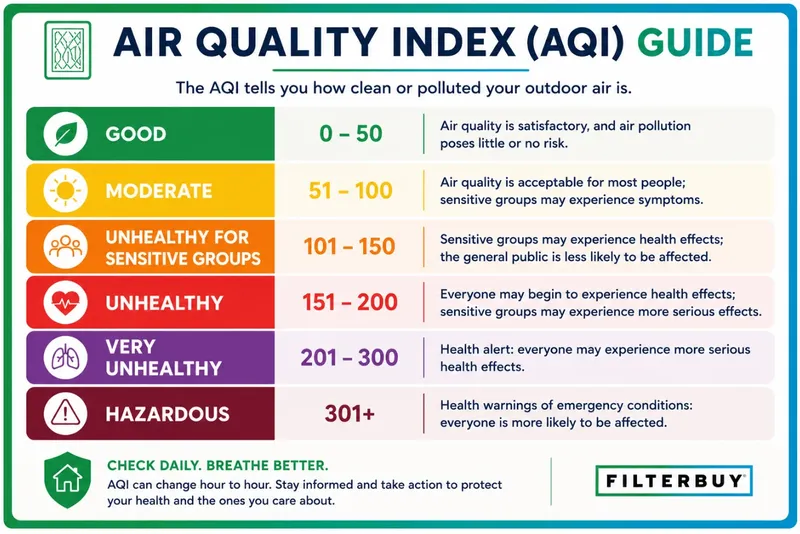
The number on the live map is an Air Quality Index value, scored from 0 to 500 across six color-coded bands. Green, 0 to 50, is safe for everyone. Yellow, 51 to 100, is moderate, and people with asthma should start paying attention. Orange, 101 to 150, means sensitive groups should limit outdoor exertion. Red, 151 to 200, is unhealthy for the general population, and Purple plus Maroon, 201 and above, moves into very unhealthy and hazardous territory.
EPA AirNow pulls the federal score from regulatory monitors across the Los Angeles Basin, and South Coast AQMD blends that data with hundreds of low-cost sensors to publish neighborhood-level readings across Glendale, Burbank, and Pasadena. Filterbuy checks this same live data before recommending a filter to any Glendale customer, rather than defaulting to one rating year-round.
AQI bands follow the EPA scale. Recommended filtration reflects Filterbuy's general guidance for residential HVAC systems, not a substitute for a licensed technician's assessment.
Most air quality pages treat Glendale as an extension of flat Los Angeles. It isn't. The Verdugo Mountains and the San Fernando Valley turn the same regional smoke event or ozone spike into a noticeably different day here than three miles away in Burbank or Eagle Rock. Three causes explain most elevated Glendale readings, and which one is behind today's number depends on the season and the wind.
Ground-level ozone forms when nitrogen oxides from freeway traffic react with volatile organic compounds in strong sunlight. The surrounding mountains hold that reaction in place through the afternoon instead of letting it disperse, part of why the Los Angeles-Long Beach region has ranked as the nation's worst metro for ozone in twenty-six of the last twenty-seven years of tracking.
Fine particulate matter measures 2.5 micrometers and smaller, small enough to travel deep into lung tissue. Diesel traffic contributes year-round, and cool overnight air settling into the Verdugo Wash and Crescenta Valley traps particles close to the ground until the morning sun breaks up the layer.
Santa Ana wind events between October and April can push smoke from fires burning miles away directly over Glendale. During the January 2025 Eaton Fire, smoke moved toward Pasadena and downtown Los Angeles, and South Coast AQMD recorded PM2.5 at Unhealthy to Hazardous levels across central Los Angeles County, with Glendale and other San Gabriel Valley communities among the areas affected. USC Dornsife researchers later estimated the fire's carbon monoxide output at more than twenty times the county's typical daily human-caused emissions. Track active fires on the live U.S. wildfire and smoke map.
The question Filterbuy hears most from Los Angeles Basin customers during a fire isn't how bad the smoke looks outside. It's how long they need to keep running MERV 13 once the sky clears, since PM2.5 can linger indoors for days after the outdoor number drops back to Moderate.
The pollutant behind today's live reading depends on the season and the wind. Track active fires on the live U.S. wildfire and smoke map.
Outdoor numbers tell you when to act. Indoor filtration determines whether the action actually works. After manufacturing filters for over a decade and serving more than two million households, we have watched Glendale-area families who match their MERV rating to the day's AQI band notice cleaner air within the hour.
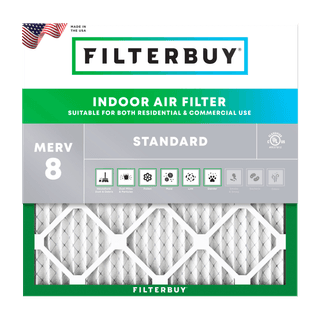
Yellow days, AQI 51 to 100: MERV 8 baseline filtration is acceptable for healthy adults. Sensitive groups should consider MERV 11 to capture more pollen and fine dust.
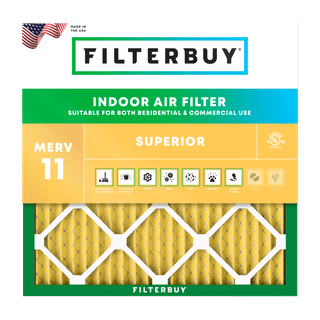
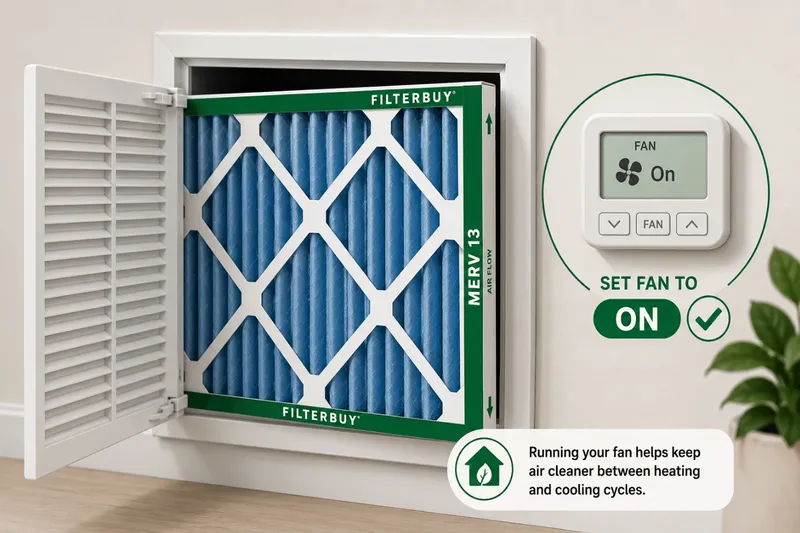
Orange days, AQI 101 to 150: Move to MERV 11 filters. Run the HVAC fan on continuous instead of auto so filtered air keeps circulating between cooling cycles.
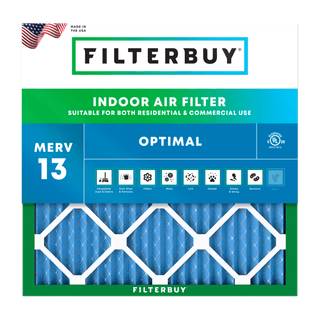
Red days and wildfire smoke events, AQI 151 and above: MERV 13 filters are the residential minimum. Close fresh-air intakes if your system has them, and consider a supplemental air cleaner for one closed bedroom.
The question I hear most from Southern California customers isn't which filter to buy, it's whether they still need it once fire season ends.
Michelle Wan, Brand Manager and Air Quality Writer, Filterbuy
The honest answer is usually yes for a few extra weeks, then no. A MERV 13 that earned its keep in October is often overkill by January, and dropping back to MERV 8 or 11 once the AQI settles saves the blower unnecessary strain until the next smoke event.
Two facts about Glendale housing change the advice above for a lot of readers, and most AQI pages never mention either one.
Close to two-thirds of Glendale households rent, and most of that housing sits in multi-family buildings where a property manager, not the resident, controls the central HVAC filter. If that's your situation, a portable air cleaner sized to one bedroom does the job a whole-house filter can't reach for you, and it moves with you when the lease ends. Check your lease before swapping a landlord-owned filter yourself.
Glendale's housing stock is older than a lot of Southern California, with a large share of homes and apartment buildings built before 1970. Older blowers were not engineered for a MERV 13 filter's added airflow resistance. Jumping straight to MERV 13 on an aging system can strain the motor instead of cleaning the air, so check your system's manual or ask a technician before upgrading, not after.
In the South Coast Air Basin, the air quality story shifts with the season. Ozone dominates from spring through fall, and PM2.5 takes over in winter and during any wildfire smoke event drifting toward the Verdugo Mountains. When the live map turns red because of smoke, every Glendale household should be running MERV 13 with the fan on continuously. We have watched that single change cut indoor PM2.5 significantly within the first hour. For a family with young kids or asthma, that is the difference between a safe room and a smoky one.
David Heacock, Founder & CEO, Filterbuy
Each resource solves a different piece of the same problem: knowing the number, understanding why it matters, and protecting your home once you have the answer. They run from the most immediate action to the most long-term.
1. Check Glendale's Live AQI Straight From the Federal Source
EPA AirNow pulls hourly readings from every regulatory monitor in California, including the stations covering Glendale, so the number on this page matches the federal record.
Source: airnow.gov/state/?name=california
2. See Tomorrow's Air Quality Before You Plan Your Day
South Coast AQMD's daily forecast blends regulatory monitors with hundreds of low-cost sensors, giving Glendale households a look ahead instead of only a current reading.
Source: aqmd.gov/home/air-quality/air-quality-forecasts
3. Understand Why Los Angeles Air Ranks Among the Nation's Worst
The American Lung Association's State of the Air report tracks ozone and particle pollution trends for the Los Angeles-Long Beach metro area, which includes Glendale.
Source: lung.org/research/sota/city-rankings/msas/los-angeles-long-beach-ca
4. Know Who Faces the Highest Risk When Smoke Moves In
The CDC's wildfire safety guide identifies who is most vulnerable to smoke exposure and how to protect indoor air during a fire.
Source: cdc.gov/wildfires/about/index.html
5. Get Step-by-Step Guidance for Protecting Your Home During Smoke
LA County Public Health's wildfire smoke page covers recirculate settings, mask guidance, and exactly when sensitive groups should stay indoors.
Source: publichealth.lacounty.gov/eh/safety/wildfire-smoke.htm
6. Learn Why a Higher-Rated Filter Performs Better in Smoke
ASHRAE maintains the MERV testing standard used across the HVAC industry and explains why higher-rated filters outperform basic ones during smoke events.
Source: ashrae.org/technical-resources/filtration-disinfection
7. Track Official Air Monitoring After a Major Wildfire
CARB coordinates air monitoring across the Los Angeles region during wildfire recovery, tracking ash and lingering particulate concerns long after the smoke clears.
Source: ww2.arb.ca.gov/lafiresrecovery
Outdoor numbers get the attention. The research behind them points Glendale families toward indoor action. All three sources are independent of Filterbuy.
1. Indoor Air Can Be Two to Five Times More Polluted Than Outdoor Air
Source: EPA exposure research.
Most people spend about 90% of their time indoors.
Indoor pollutant levels can run 2 to 5 times higher than outdoor levels.
Source: epa.gov/report-environment/indoor-air-quality
2. Wildfire PM2.5 Exposure Is Linked to a Measurable Rise in Respiratory Visits
Source: peer-reviewed study, Nature Communications (2021).
Focused specifically on California wildfire smoke exposure.
Found a measurable rise in respiratory-related hospital visits during smoke events.
Source: pmc.ncbi.nlm.nih.gov/articles/PMC7935892
3. Los Angeles Ranks Among the Nation's Most Challenging Places to Manage Asthma
Source: AAFA 2025 Asthma Capitals report.
Los Angeles metro area, which includes Glendale, ranks 26th of the 100 largest U.S. cities.
Received an F grade for high ozone and particle pollution days.
Source: aafa.org 2025 Asthma Capitals Report
The live reading above updates hourly from EPA AirNow and South Coast AQMD monitors. It reflects whichever pollutant, ozone or PM2.5, is highest that hour. Ozone typically dominates on warm afternoons, while PM2.5 takes over on winter mornings and during wildfire smoke.
A reading of 50 or below is Green, with little risk to anyone. Yellow, 51 to 100, means sensitive groups should pay attention. Orange, 101 to 150, calls for limiting outdoor exertion. At 151 and above, everyone should cut outdoor time and run MERV 13 indoors.
Glendale sits in a valley bounded by the Verdugo Mountains, which traps vehicle emissions on hot, still afternoons and drives ozone higher than flatter parts of the region. PM2.5 adds to the problem in winter and during Santa Ana wind events, when wildfire smoke drifts over the city.
The January 2025 Eaton Fire sent smoke toward Pasadena and downtown Los Angeles. South Coast AQMD recorded PM2.5 at Unhealthy to Hazardous levels across central Los Angeles County, with Glendale and nearby San Gabriel Valley communities among the areas affected, and issued multiple smoke advisories in the days that followed.
MERV 11 is a solid year-round baseline for most Glendale homes, capturing pollen, mold spores, and fine dust without overloading a residential blower. On wildfire smoke days or once the AQI reaches Orange or higher, MERV 13 gives stronger protection against PM2.5. Filterbuy makes both ratings in the sizes most Glendale HVAC systems use.
Most Glendale renters can't swap the central filter without a property manager's involvement, and some leases restrict it outright. A portable air cleaner sized to your bedroom or main living space captures the same PM2.5 and smoke particles a MERV 13 filter would, without touching equipment you don't own. Sealing gaps around windows and doors during smoke events helps more in a rental than most people expect.
The live map tells you the number. Your filter decides what your household actually breathes once everyone walks back inside. Whether today is a clear afternoon or a smoky one, we can help you find which MERV rating to choose, match the right size to your return grille, and set up an air filter subscription so a fresh one arrives on the schedule your system actually needs.
Filterbuy panels are made to order and ship free within the continental United States, arriving in most cases within 3 to 4 business days of an order placed for delivery to Glendale, per Filterbuy's shipping policy.
Filterbuy manufactures in Alabama, Florida, Pennsylvania, and Utah.
Air Quality Index (AQI): A 0 to 500 scale the EPA uses to show how polluted outdoor air is and which precautions apply at each level.
PM2.5: Fine particulate matter 2.5 micrometers or smaller, small enough to travel deep into lung tissue.
MERV Rating: The Minimum Efficiency Reporting Value, an ASHRAE-defined scale from 1 to 16 measuring how well a filter captures particles.
Santa Ana Winds: Strong, dry offshore winds common in Southern California between October and April that can rapidly spread wildfire smoke.
South Coast Air Basin: The air district covering most of Los Angeles, Orange, and parts of San Bernardino and Riverside Counties, including Glendale.
Ground-Level Ozone: A pollutant formed when emissions react with sunlight, distinct from the protective ozone layer high in the atmosphere.