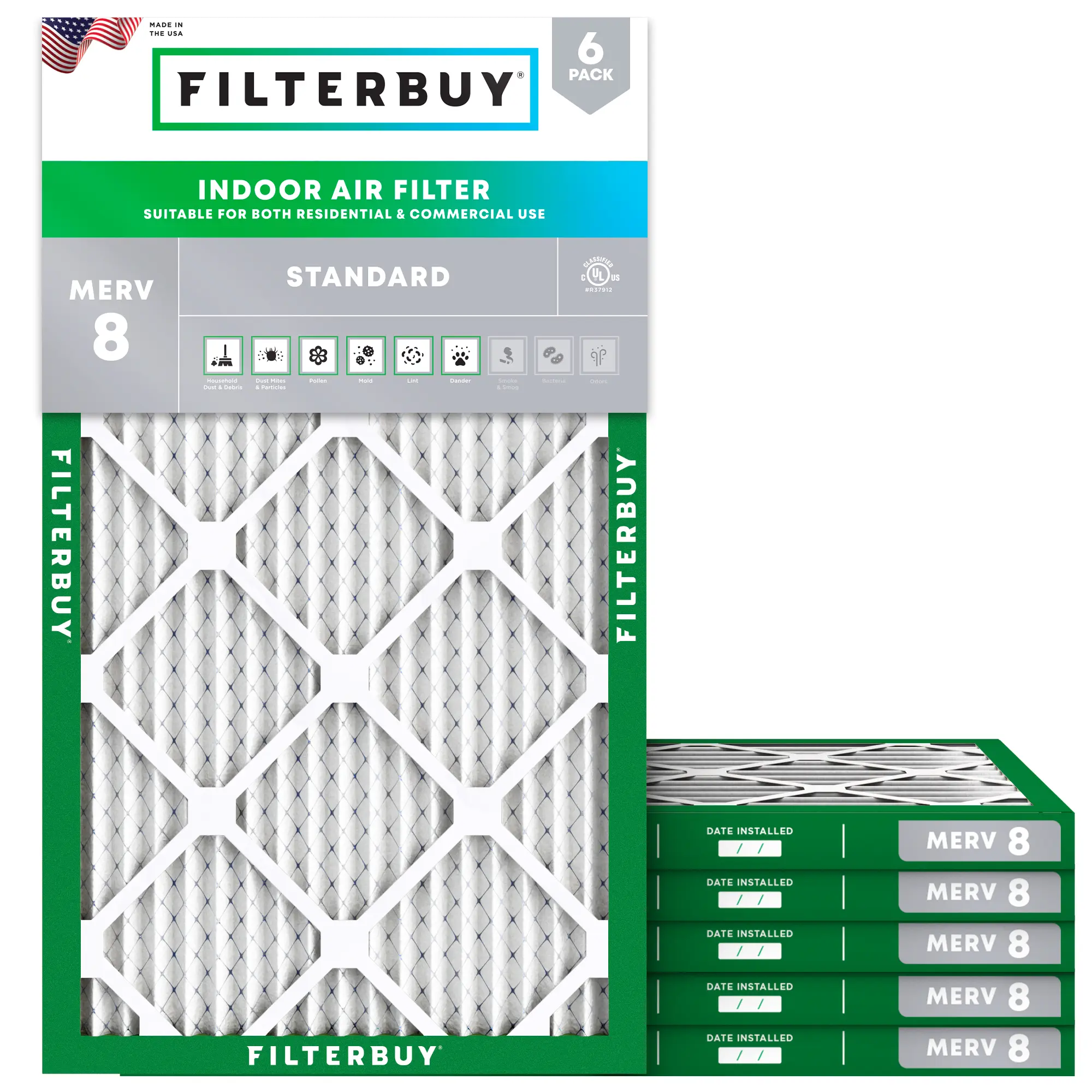
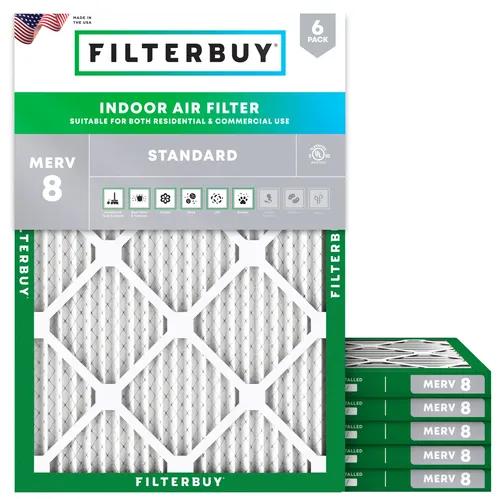
Actual Size: 10.00x33.00x0.75"
 Free Delivery
  Factory-Direct Low Prices, Made in the USA
 Hassle-Free Returns & Free Exchanges
RESIDENTIAL AND/OR COMMERCIAL USE
Change Every 3 Months
Actual Size: 10.00x33.00x0.75"
Free Delivery Factory-Direct Low Prices, Made in the USAHassle-Free Returns & Free ExchangesRESIDENTIAL AND/OR COMMERCIAL USE
Change Every 3 Months
Actual Size: 10.00x33.00x0.75"
Free Delivery Factory-Direct Low Prices, Made in the USAHassle-Free Returns & Free ExchangesRESIDENTIAL AND/OR COMMERCIAL USE
Change Every 3 Months
At Filterbuy, we don't cut corners—we craft high-quality air filters right here in the USA and ship them to your doorstep for free. No delays, no gimmicks—just clean air, made easy. With thousands of five-star reviews and filters built for real life & every HVAC system, it's no wonder why over 4 million families trust Filterbuy.

Proudly Made In The USA

Fast, Free Shipping on Every Order

Premium Materials That Go The Distance

85,000+ 5-Star Reviews From Happy Customers

Save Up to 70% Per Filter with Packs


Measure length × width × depth with a tape measure to find the actual size.

Round up each dimension to the nearest whole number to get the nominal size. Example: 10.00x33.00x0.75" in → 10x33x1 nominal.

Search by nominal size on our site for the best fit.


If the filter you buy doesn't fit, we'll send you a better size.
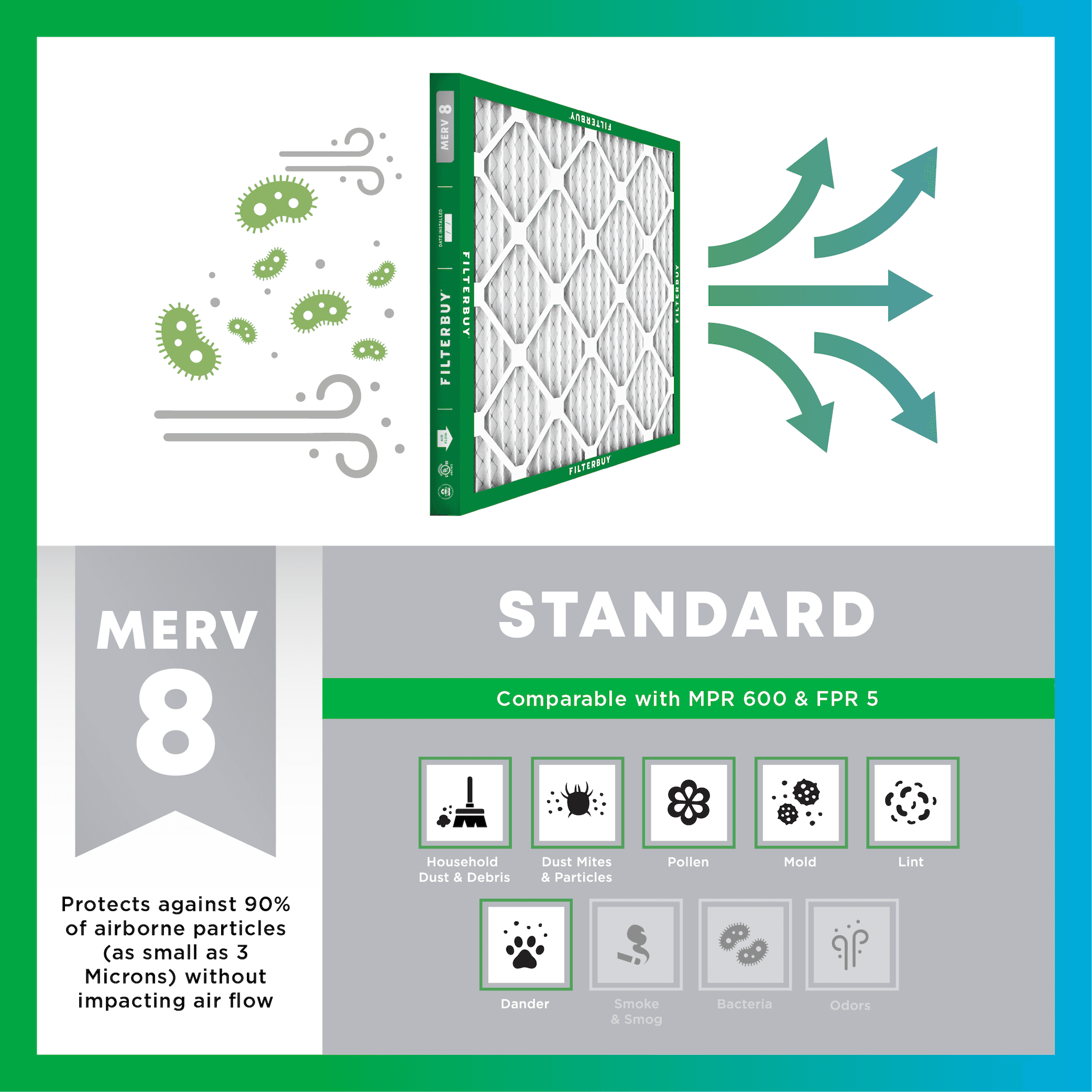
MERV stands for Minimum Efficiency Reporting Value—but don't let the technical name fool you. It's just a way to rate how well an air filter traps stuff like dust, pollen, pet dander, and smoke. The higher the MERV number, the more particles it catches—and the cleaner your air will be.

Comparable to:FPR: 4-7
MPR: 600-1000
 Dust & Debris
 Dust Mites & Particles
 Pollen
 Mold
Mold Lint
Lint Dander
Comparable to:FPR: 6-9
MPR: 1200-1550
Dust & DebrisDust Mites & ParticlesPollenMoldLintDander Smoke & Smog
Comparable to:FPR: 10
MPR: 1900-2800
Dust & DebrisDust Mites & ParticlesPollenMoldLintDanderSmoke & Smog Bacteria


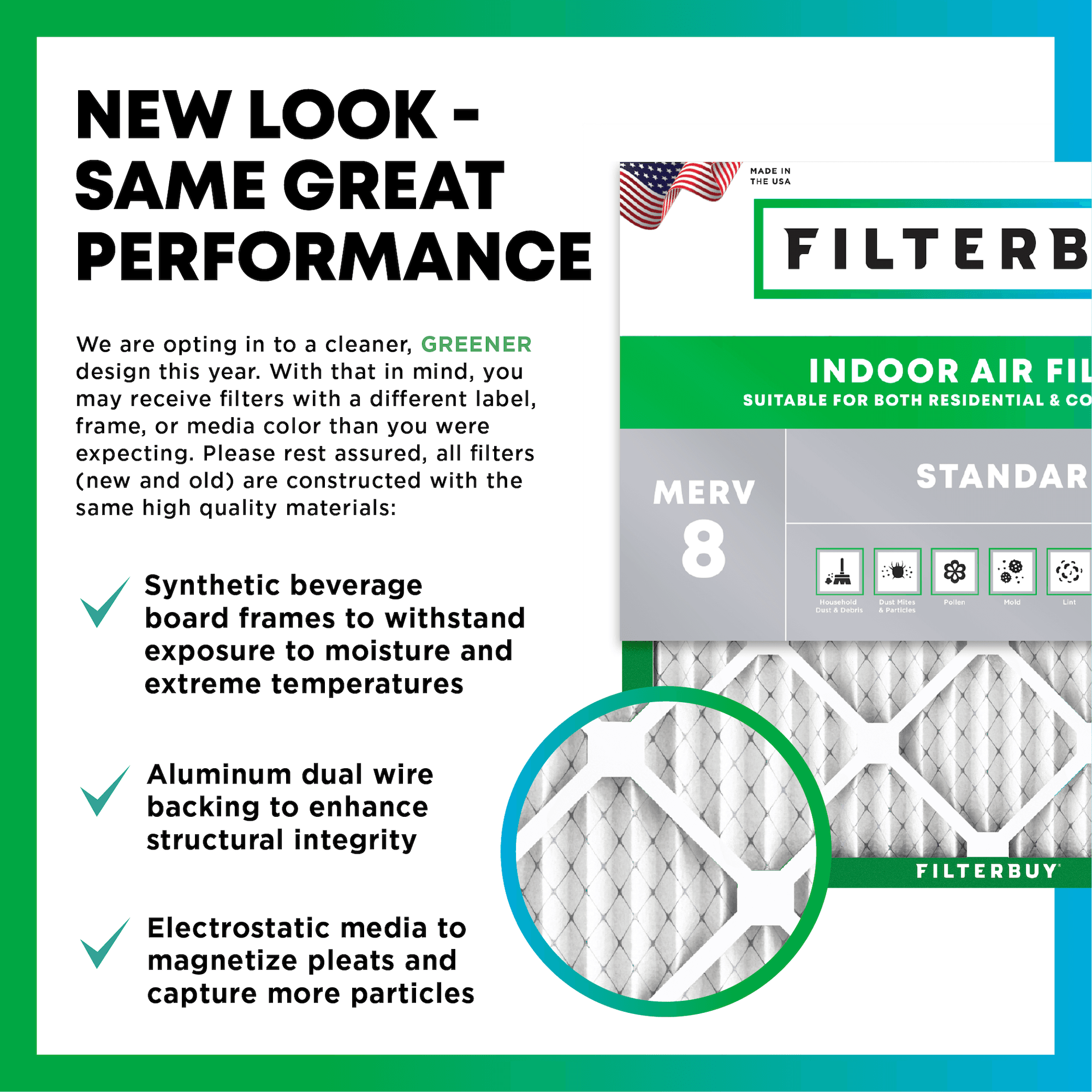
We build every Filterbuy filter to deliver reliable 90-day performance—thanks to smart design and premium materials that do the heavy lifting. Here's what makes the difference:
More pleats = more surface area to capture dust and debris, keeping your air cleaner longer.
Pleats are magnetized to attract and trap microscopic particles—like pet dander, pollen, and smoke.
Engineered to resist warping in extreme temperatures and high humidity.

A layer of metal reinforcement keeps pleats evenly spaced and structurally sound—no sagging, even at high airflow.
Assembled with care. Built to perform. Ships fast, free, and reliably from our U.S. facilities.

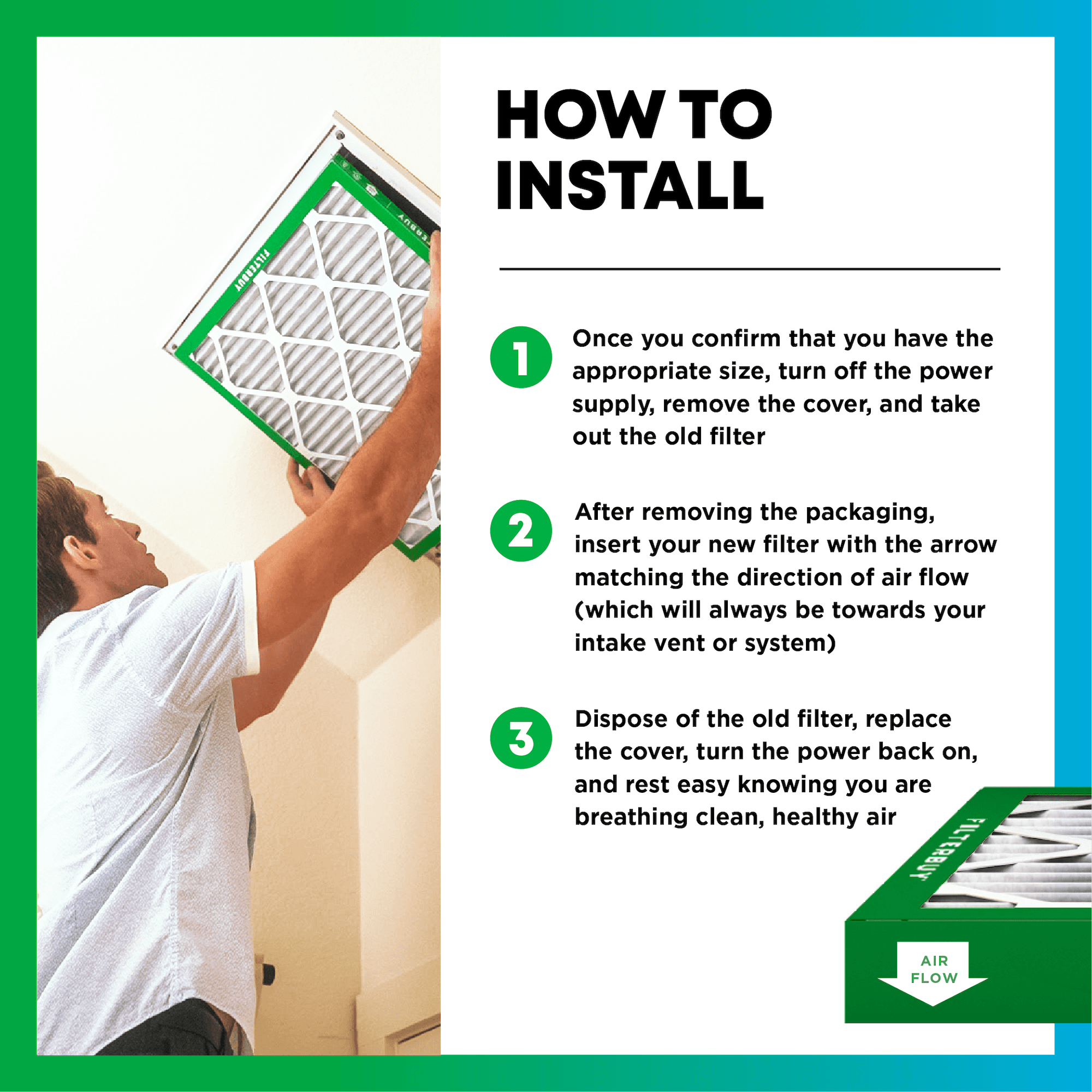
Turn Off Your HVAC SystemSafety first.

Remove The Old FilterLook for the airflow arrow and make note of the direction.

Slide In Your New FilterArrow should point toward the system (same direction as before).

Turn Your System Back OnAnd enjoy the fresh, clean air.

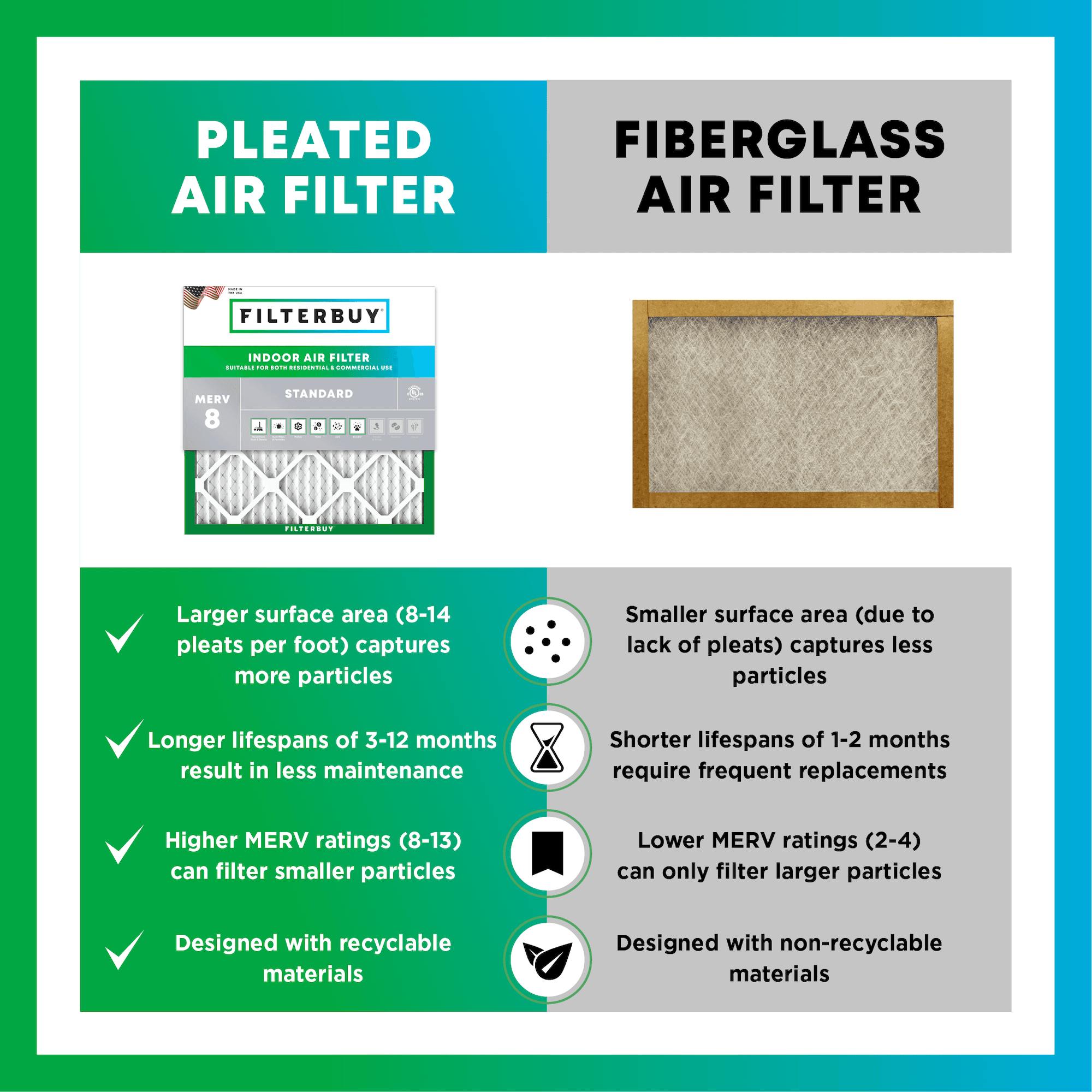
Not all air filters are created equal. Pleated filters don't just last longer—they actually clean your air better. Here's how they stack up:

Efficiency:
High (MERV 8–13) – Traps more particles
Lifespan:
90 days – Long-lasting performance
Air Quality:
Excellent – Cleaner, healthier air
Materials:
Recyclable and durable

Efficiency:
Low (MERV 4 or less) – Misses small stuff
Lifespan:
30 days or less – Replace often
Air Quality:
Minimal – Basic protection only
Materials:
Thin, flimsy, and not recyclable
Pleated filters are a no-brainer—more protection, less hassle, and better air for your home.
Changing your filter on time keeps your HVAC system running efficiently—and helps protect your lungs from dust, allergens, and airborne irritants. Here's how often to swap it out based on your needs:

For most homes without pets or special air quality concerns. Great for general upkeep and energy efficiency.

Shedding fur, dander, and allergy triggers can build up fast. Changing your filter every two months helps keep the air fresher and symptoms at bay.

For households affected by smoke, pollution, or respiratory conditions, monthly changes ensure maximum protection.

| Nominal Size | 10 x 33 x 1 inches |
| Actual Size | 10.00 x 33.00 x 0.75" inches |
| Filter Type | Pleated |
| Media | Electrostatically Charged |
| Frame | Beverage Board |
| MERV Ratings Available | 8, 11, 13 |
| Lifespan | Up to 90 Days |
| Origin | Made in USA |
Looking for the right MERV 8 10×33×1? Choose a rigid, true-size pleated filter with low pressure drop—it captures the everyday offenders (dust, pollen, lint, pet dander) while keeping airflow strong and blower motors happy. As air-obsessed manufacturers, our pick comes from hands-on testing and thousands of installs, so you can protect your family, home, and HVAC without over-filtering.
What you’ll get here—fast:
Vetted picks that balance capture + airflow (no guesswork).
Fit guidance to stop bypass: actual dimensions + a quick tape-measure check.
Maintenance cues that match real life (usually 60–90 days, plus early warning signs).
Installer tips to seat the filter square, silence rattles, and keep the seal tight.
Small effort, big impact—change your filter with confidence.
A MERV 8 10×33×1 is the everyday sweet spot for most homes — it captures dust, pollen, lint, and pet dander without choking your system. Choose a true-size, rigid-frame pleated filter with a published low pressure drop to keep airflow strong and your blower happy. Verify your actual slot dimensions with a tape measure (don't trust the old filter's label alone), seat the filter square with the airflow arrow pointing toward the blower, and replace every 60–90 days. From our manufacturing line and thousands of real-home installs, most comfort and dust complaints trace back to bypass air from a poor fit — not the MERV rating. Small effort, big impact.
MERV 8 (10×33×1) = everyday sweet spot. Captures dust, pollen, lint, and pet dander while keeping airflow strong.
Fit beats rating. Choose a true-size, rigid frame and seat it square to stop bypass (no whistling, no gray streaks).
Low pressure drop matters. Protects the blower, stabilizes comfort, and supports efficiency.
Simple maintenance. Check monthly; replace every 60–90 days (earlier with pets, smoke, allergies, or construction).
Only step up with a reason. Go higher MERV for fine-particle needs—and confirm system capacity first.
Look for a verified MERV 8 (10x33x1) that consistently captures everyday particles—dust, pollen, lint, and pet dander—without over-restricting your system. Prioritize a published low pressure drop to keep airflow strong, protect the blower, and maintain steady comfort and efficiency. Ensure a true-size, rigid frame that seats square in the slot to prevent bypass, whistling, bowing, or gray dust streaks around the grille. Choose pleated, high–surface-area media with stable geometry for higher holding capacity and even performance, along with durable, moisture-resistant construction, secure seams, and clear airflow arrows for a confident install. Finally, buy from a transparent, reputable manufacturer that provides clear specs (e.g., MERV per ASHRAE 52.2 and initial pressure drop) and responsive support.
Bottom line: a rigid, true-size pleated MERV 8 with low pressure drop delivers cleaner air with less strain on your HVAC.
For reliable HVAC performance, choose a rigid, true-size pleated MERV 8 (10x33x1) with quality synthetic media and a published low pressure drop. This sweet-spot rating captures the everyday, hard-to-see offenders—dust, pollen, lint, and pet dander—while keeping airflow strong to protect your blower and comfort. Look for stable pleat geometry, moisture-resistant construction, and a snug, square fit to prevent bypass; always verify actual dimensions against your opening, not just the old filter’s label. From our manufacturing line and thousands of real-world installs, we’ve seen that right-sizing and low pressure drop support efficiency and equipment longevity across homes and light commercial systems. Step up to a higher MERV only for specific fine-particle needs—and confirm your system can handle the added resistance.
If you’re cost-conscious and still want clean, healthy airflow, choose a rigid, true-size pleated MERV 8 with low pressure drop. Pleated synthetic media offers far better everyday capture (dust, pollen, lint, pet dander) than basic fiberglass while keeping your system breathing easy—and multipacks keep the price per filter low. Use fiberglass only as a short-term stopgap; it provides minimal filtration and isn’t ideal for families with pets or allergies. Prioritize fit and construction (snug seal, moisture-resistant frame), check monthly, and replace every 60–90 days—or sooner during heavy use—to protect your blower, manage energy costs, and keep your home’s air noticeably cleaner. Small effort, big impact.
For healthier everyday air without stressing your system, choose a rigid, true-size pleated MERV 8 made with high-quality synthetic (often electrostatically charged) media and a published low pressure drop. This construction reliably captures dust, pollen, lint, and mold spores while keeping airflow strong to protect your blower and maintain steady comfort. A reinforced, moisture-resistant frame preserves pleat shape and seals tightly to prevent bypass, supporting consistent performance and practical service life—check monthly and replace every 60–90 days (earlier with pets, smoke, or allergies). Look for transparent specs (MERV per ASHRAE 52.2, initial pressure drop) and responsive support. Backed by our manufacturing experience and customer feedback, these features deliver a small effort with a big impact on your home’s air and HVAC health.
Clean air is a habit. Check monthly and replace every 60–90 days—earlier if you have pets, smoke, construction dust, or allergies. Swap sooner when you see dark pleat lines, a musty start-up smell, higher energy bills/longer run times, or visible dust on vents.
Do these quick wins between changes:
Vacuum the return grille and cabinet area to cut stray dust before it hits the filter.
Inspect for bypass and leaks: the filter should be true-size, seated square, and installed with the airflow arrow toward the blower. Whistling or gray dust streaks = poor seal.
Keep vents and registers unobstructed (no furniture or rugs blocking airflow).
Close the access door fully so the filter stays centered and tight.
Keep a spare on hand and set a calendar reminder so you can swap the moment air quality or airflow dips.
Small effort, big impact—these habits protect your blower, stabilize comfort, and keep everyday pollutants out of your home’s air.
“From thousands of in-house bench checks and real-home installs, our takeaway is clear: most comfort and dust issues come from bypass air, not a “too-low MERV.” A true-size, rigid MERV 8 (10×33×1) seated square maintains healthy airflow and captures the particles you actually notice—without the trade-offs of unnecessary restriction. When needs change (wildfire smoke or clinician-guided concerns), we step up MERV deliberately and only after confirming your system’s capacity, so you get results—not compromises.”
Most exposure happens indoors. Americans spend ~90% of their time inside, and indoor pollutant levels can be 2–5× higher than outdoors—one reason we emphasize whole-home filtration.
Source: U.S. EPA
Clean filter = lower energy use. Replacing a dirty filter can cut HVAC energy consumption by ~5–15%; we also see immediate airflow recovery in bench tests.
Source: U.S. Department of Energy (Energy.gov)
Simple upkeep, real results. Check monthly and change at least every 3 months; adjust sooner for pets, smoke, construction dust, or allergies.
Source: ENERGY STAR
A well-built, true-size pleated MERV 8 (10×33×1) with low pressure drop hits the sweet spot—strong everyday capture and healthy airflow without unnecessary restriction.
What matters most: Fit and pressure drop beat chasing higher MERV. Most comfort complaints start with bypass air or bent frames, not the media rating.
Field reality: Whistling, gray dust streaks, or “dusty” rooms usually trace back to a loose fit or poor seating, not filtration “too low.”
Do This (Proven Sequence)
Start with a true-size, rigid-frame pleated MERV 8.
Seat it square to stop leaks and rattles.
Check monthly; replace every 60–90 days (earlier with pets, smoke, or heavy dust).
Step up MERV only with a clear need (e.g., wildfire smoke, clinician guidance) and confirm system capacity first.
Expected result: Cleaner air you can feel, a happier blower motor, and steadier energy bills—without trade-offs.
1) Measure & confirm size
Check the label on your old filter.
Measure the actual slot/opening to verify 10×33×1.
Note the airflow arrow direction for re-install.
Pick a MERV 8, true-size, rigid-frame pleated filter.
Prefer a published low pressure drop to keep airflow healthy.
3) Stock up smart
Buy a 3–6 pack to stay on schedule.
Write the install date on the frame.
4) Install correctly
Arrow toward the blower.
Seat square and snug; close and latch the grille or door fully.
Check monthly.
Replace every 60–90 days (earlier with pets, smoke, construction dust, or allergies).
6) Optimize if needed
For fine particles (e.g., wildfire smoke or clinician guidance), confirm system capacity before stepping up MERV.
Only move higher if airflow stays healthy.
7) Verify performance
Run the system 10–15 minutes: listen for no whistles, feel for even temps.
Check for no gray dust streaks around the grille (sign of bypass).
8) Stay proactive
Set reminders for checks and changes; keep a spare on hand.
Book a seasonal tune-up if it’s been 12+ months.
Yes—it's the everyday sweet spot when true-size, rigid, pleated and low pressure drop.
60–90 days typically; check monthly and change sooner with pets, smoke, construction, or allergies.
Depends. MERV 11 catches finer particles but adds resistance—use if sensitivities exist and your system can handle it.
MERV 13 targets much finer particles (e.g., smoke) but may restrict airflow; step up only for a clear need after verifying capacity.
Usually MERV 8; consider 11/13 for allergies or smoke if airflow stays healthy.
It captures many mold spores but won’t fix moisture sources—address humidity and leaks, too.
Yes—pleated synthetic media = better capture + holding capacity with good airflow at low pressure drop.
No—pressure drop, true size, media quality, and frame rigidity vary. Choose true-size, rigid, low ΔP.
Yes—effectively for everyday pollen loads.
Pick a maker with ASHRAE-tested MERV, published pressure drop, sturdy frames, and true sizes (e.g., Filterbuy).
Potential airflow restriction, blower stress, and higher energy use if the system isn’t designed for it.
Often MERV 14–16 (plus HEPA in critical areas)—well above typical residential needs.
Stop guessing and start breathing easier — grab a true-size, rigid-frame pleated MERV 8 10×33×1 built for real-world performance. Shop now, stock up in multipacks, and make your next filter change the easiest upgrade your home and HVAC will feel.

